Albanian Food: A Guide to Albanian Cuisine
Albanian food explained: what Albanian cuisine is, its Ottoman and Mediterranean roots, staple ingredients, 20 dishes to know and how Albanians eat.
Published
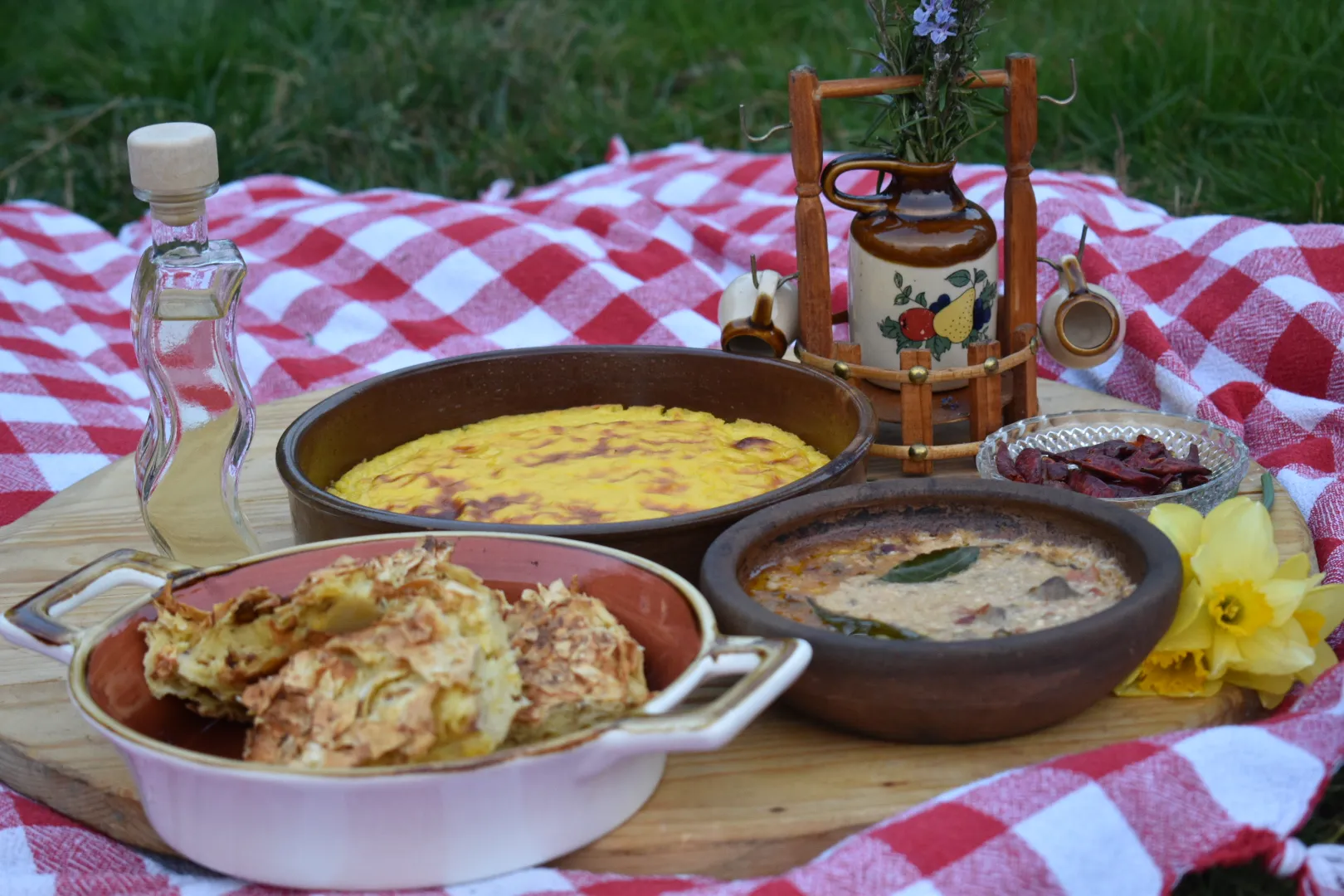
Albanian food is Mediterranean cooking with a strong Balkan and Ottoman accent: olive oil, yogurt and white cheese, lamb, vegetables baked slowly in clay dishes, flaky pies like byrek, and sweets soaked in syrup. Albanian cuisine also changes a great deal from the mountains of the north to the olive groves of the south, and at its heart are a long family lunch, bread on every table and the duty to feed a guest well.
What Albanian cuisine is
Reference works describe Albanian cuisine as typically Mediterranean, built on Mediterranean, Ottoman and Balkan traditions, and usually divide it into three regional cuisines: north, centre and south, shaped by high mountains, farming plains and a long coast. Our guide to Albanian regional cuisine covers those differences town by town.
Many of the best known dishes are baked in a tavë, a shallow clay or metal dish, and arrive at the table still bubbling, to be eaten with bread.
Influences: from the Illyrians to the Ottomans and Italy
Ancient roots. The Illyrians, who lived in the region in antiquity, herded sheep and grew olives and grapes. Greek, Roman and Byzantine rule each added ingredients and recipes.
The Ottoman centuries. The Ottomans conquered Albania in the 15th century and ruled it until independence in 1912. They left filo pastry, kebabs, byrek, bakllava, pilaf and the use of spices. Influence ran both ways: two dishes known in Turkey today, Arnavut ciğeri (“Albanian liver”) and Elbasan tava, carry Albanian names.
Italy and the West. Italian ideas arrived after 1912, and olives, tomato sauce and pasta are common ground between the two shores of the Adriatic. After 1991 more than 600,000 Albanians emigrated in a single decade, and for a while foreign food was seen as more modern than grandmother’s cooking.
The communist decades. From the end of the Second World War until 1991, Albania was ruled by a communist regime. The state rationed food, collectivised all farmland by 1967 and banned religion in the same year. Meat, eggs, cheese, sugar and coffee were rationed, cookbooks were scarce, and many regional recipes and ingredients were lost. In the food crisis of 1990-1992 Italy sent 83,000 tonnes of food aid.
The revival. In recent years a new generation of chefs has gone back to village recipes. Bledar Kola returned from abroad to open Mullixhiu in Tirana in 2016, and Altin Prenga’s Mrizi i Zanave in Fishtë, often called Albania’s first Slow Food restaurant, buys from more than 400 farming families.
Staple ingredients
| Ingredient | How it is used | Substitute outside Albania |
|---|---|---|
| Olive oil | The oldest and most used cooking fat | Any good extra virgin olive oil |
| Kos (yogurt) | Thick yogurt for tavë kosi, tarator and drinks | Full-fat Greek-style yogurt |
| Djathë i bardhë (white cheese) | Brined white cheese with salads, byrek and meze | Feta |
| Gjizë | Salted curd cheese for fërgesë, byrek and peppers | Ricotta mixed with feta |
| Kaçkavall | Semi-hard cheese, eaten raw or fried | Kashkaval or a mild provolone |
| Corn flour | Cornbread, pies like pispili, ballokume | Fine polenta flour |
| Peppers, tomatoes, onions | The base of fërgesë and summer dishes | Easy to find |
| Oregano, mint, mountain tea | Dried herbs for meat, rice and tea | Greek mountain tea (Sideritis) |
Albania grows a lot of olives: 143,383 tonnes were harvested in 2025, more than 80% of them in the regions of Fier, Elbasan, Berat and Vlorë. The main native variety is Kalinjot. Around 250 aromatic and medicinal plants are cultivated, and oregano, thyme and sage are exported. Lamb is the meat of grills and of tavë kosi, though beef and veal are eaten more often. Çaj mali, mountain tea made from Sideritis, is the country’s favourite herbal tea.
20 Albanian dishes to know
Pies and doughs
- Byrek. Albania’s everyday pie: thin sheets of hand-rolled dough layered with cheese, spinach, meat or other fillings, sold in triangles or baked as a large round pie. Try our spinach byrek, or read how it differs from burek and börek in our byrek guide.
- Lakror. A pie from Korçë, Pogradec and Devoll, traditionally baked under a saç, an iron lid covered with embers. Fillings include leeks, cabbage and nettles.
- Flia. Layer after layer of thin batter brushed with cream and baked slowly under a saç. A dish of northern Albania and Kosovo.
- Pispili. A cornmeal pie with leeks or greens and cheese, from the Korçë and Pogradec area.
- Petulla. Puffs of fried yeast dough, eaten for breakfast with sugar, jam or white cheese.
Baked dishes and stews
- Tavë kosi. Lamb and rice baked under a layer of yogurt and eggs. It comes from Elbasan and is often called the national dish, although that title is not official.
- Fërgesë. Peppers, tomatoes and onions baked with gjizë until creamy, the dish of Tirana. A second Tirana version adds liver.
- Jani me fasule. A thick soup of small white beans with herbs, described by the National Tourism Agency as one of the most loved Albanian dishes.
- Tasqebap. Pieces of meat slow-cooked in a thick sauce tinted with paprika, a hearty dish of the mountain areas.
- Gjel deti me përshesh. Roast turkey served with përshesh, bread or corn cake soaked in broth: the classic New Year dish. Sources differ on what exactly goes into the përshesh.
- Trahana. Wheat fermented with yogurt and dried into crumbs, then cooked as a slightly sour soup.
Vegetables, rice and meze
- Speca të mbushura. Peppers stuffed with rice and sometimes meat, then baked. A lighter summer version uses cheese: see our baked peppers with gjizë.
- Japrakë. Vine leaves rolled around rice, meat, onion and herbs such as dill and mint. In winter the same filling goes into cabbage leaves (sarma).
- Qifqi. Small rice balls with egg and dried mint from Gjirokastër, fried in a special pan with round hollows. Some descriptions add fresh cheese.
- Tarator. A cold summer dish of yogurt, cucumber, garlic and olive oil.
- Turshi. Pickled vegetables, always present in a meze spread.
Meat and fish
- Qofte. Meatballs of minced meat and herbs, fried or grilled and sold in dedicated grills called qofteri.
- Pasha qofte. Small meatballs in broth finished with a white sauce of flour, butter, egg and lemon, a dish of the south.
- Kukurec. Offal wrapped in lamb or goat intestines and grilled, the first appetiser of a meal in Himarë on the Ionian coast. Greek kokoretsi is a close relative, and linguists disagree on where the name comes from.
- Tavë krapi. Carp from Lake Shkodër baked with onion, tomato, pepper, parsley and vinegar, a dish of the lakeside villages of Shirokë and Zogaj.
- Koran. The Ohrid trout, found only in Lake Ohrid and listed as endangered, is the symbol of Pogradec.
Sweets
Bakllava is the dessert of New Year, trileçe the modern favourite, and Elbasan’s ballokume the cookie of the spring festival. Our guide to Albanian desserts explains them all, with our trileçe recipe.
Drinks
Raki is the national spirit, a strong brandy distilled from grapes, plums or other fruit; the Skrapar area is famous for it, and the mulberry raki of Boboshticë near Korçë is listed in the Slow Food Ark of Taste. Albanian wine comes increasingly from native grapes: Shesh i Zi and Shesh i Bardhë from the Tirana area, Kallmet from Zadrima in the north, Vlosh from Vlorë, Debinë and Pulës from the south.
Albanians drink a great deal of coffee, and cafés are everywhere. A 2016 calculation by the magazine Monitor, based on official statistics, counted 654 bars and cafés per 100,000 people, more than Spain; on 2020 Eurostat data Albania ranked third in Europe, after Portugal and Greece. Other everyday drinks are dhallë, yogurt thinned with water, boza, a fermented corn drink, and mountain tea. Birra Korça, founded in 1928, is the country’s oldest brewery.
How Albanians eat
Lunch is traditionally the main meal. Breakfast is light, often byrek or petulla with yogurt, and supper is smaller. Bread is on the table at every meal. Before the main course comes the meze: salads, pickles, cheese, olives, cured meat, often with a glass of raki.
Guests come first. The Kanun, the customary law of northern Albania, says that “the house of the Albanian belongs to God and the guest”. The Albanologist Robert Elsie noted that a host may spend a month’s salary on a single visit, and in Përmet a guest is offered a spoonful of gliko the moment they walk in.
Religion shapes the calendar. Albania has a Muslim majority, including the Bektashi order, with Orthodox Christians mostly in the south and Catholics mostly in the north. Religious practice was banned from 1967 to 1990, which is why New Year became the great family feast, with roast turkey and bakllava. Each community keeps its own customs: red eggs and lamb at Easter, ashure pudding for the Bektashi, ballokume for Dita e Verës on 14 March.
Recognition
Albanian food is still little known abroad, but it has some international recognition. Albania is not part of UNESCO’s inscription of the Mediterranean diet, which covers seven other countries, but it is one of the countries in the UNESCO listing for transhumance, the seasonal moving of flocks between mountain and lowland pastures. Two Albanian products are Slow Food Presidia: Mishavinë, a traditional cheese of the Kelmend mountains in the far north, and the fruit preserves called gliko from Përmet.
Frequently asked questions
What is the national dish of Albania?
There is no official national dish. Tavë kosi, lamb baked under a layer of yogurt and eggs from Elbasan, is the one most often given that title. Fërgesë from Tirana and byrek are close contenders in popularity.
Is Albanian food the same as Greek or Turkish food?
It shares a lot with both: olive oil, yogurt, white cheese, filo pies and syrup-soaked sweets came from a common Mediterranean and Ottoman past. The differences are in local dishes, like tavë kosi, fërgesë, flia or qifqi, and in the names and details of shared ones.
Is Albania part of the UNESCO Mediterranean diet?
No. The UNESCO inscription of the Mediterranean diet covers Cyprus, Croatia, Spain, Greece, Italy, Morocco and Portugal. Albania is, however, part of the UNESCO listing for transhumance, the seasonal moving of flocks.
What do Albanians drink with food?
Raki, a strong fruit brandy usually made from grapes, is served with meze. Wine from native grapes such as Shesh i Zi and Kallmet, yogurt drinks like dhallë, and mountain tea are also common, and coffee follows almost every meal.
What Albanian dishes should I try first?
Byrek, tavë kosi, fërgesë, qofte and a plate of white cheese, olives and grilled peppers give a good first picture. For dessert, try bakllava or trileçe.
Sources
- Resurging Cuisine: Traditional Albanian Dishes Make a Comeback, AramcoWorld (2024)
- Albania: A Country Study, Retail Trade and Services, Library of Congress (1994)
- Albania: A Country Study, Medical Care and Nutrition, Library of Congress (1994)
- Robert Elsie, Albania, Countries and Their Cultures
- Ferit Tarifa, Of Time, Honor, and Memory: Oral Law in Albania, Oral Tradition 23/1 (2008)
- Agricultural Statistics 2025, INSTAT
- The growing pains of Albania's ascendant olive oil sector, Olive Oil Times (2024)
- Mediterranean diet, UNESCO Intangible Cultural Heritage
- Transhumance, the seasonal droving of livestock, UNESCO Intangible Cultural Heritage
- Mishavinë, Slow Food Presidium, Slow Food Foundation for Biodiversity
- Boboshtica mulberry raki, Ark of Taste, Slow Food Foundation for Biodiversity
- Kullaj et al., Albanian native grape cultivars, Vitis 54 (2015)
- Albania exceeds Italy and Spain for cafés per inhabitant, Periskopi (2023)
- Tavë krapi of Shirokë and Zogaj, National Tourism Agency of Albania
- Pasha qofte, National Tourism Agency of Albania
- Jani me fasule, National Tourism Agency of Albania (in Albanian)
- Più che uno chef: Altin e il sogno di un'Albania diversa, Avvenire (2025, in Italian)
- Easter in Albania, between faith and memory, OBC Transeuropa (2026)
- New Year's Eve tradition in Albania, Visit Tirana
- Albanian cuisine, Wikipedia
- Ohrid trout, Wikipedia