Albanian Regional Cuisine: North, Centre and South
Albanian regional cuisine explained: how food changes between the mountains of the north, the plains of the centre and the olive-growing south, with dishes by town.
Published
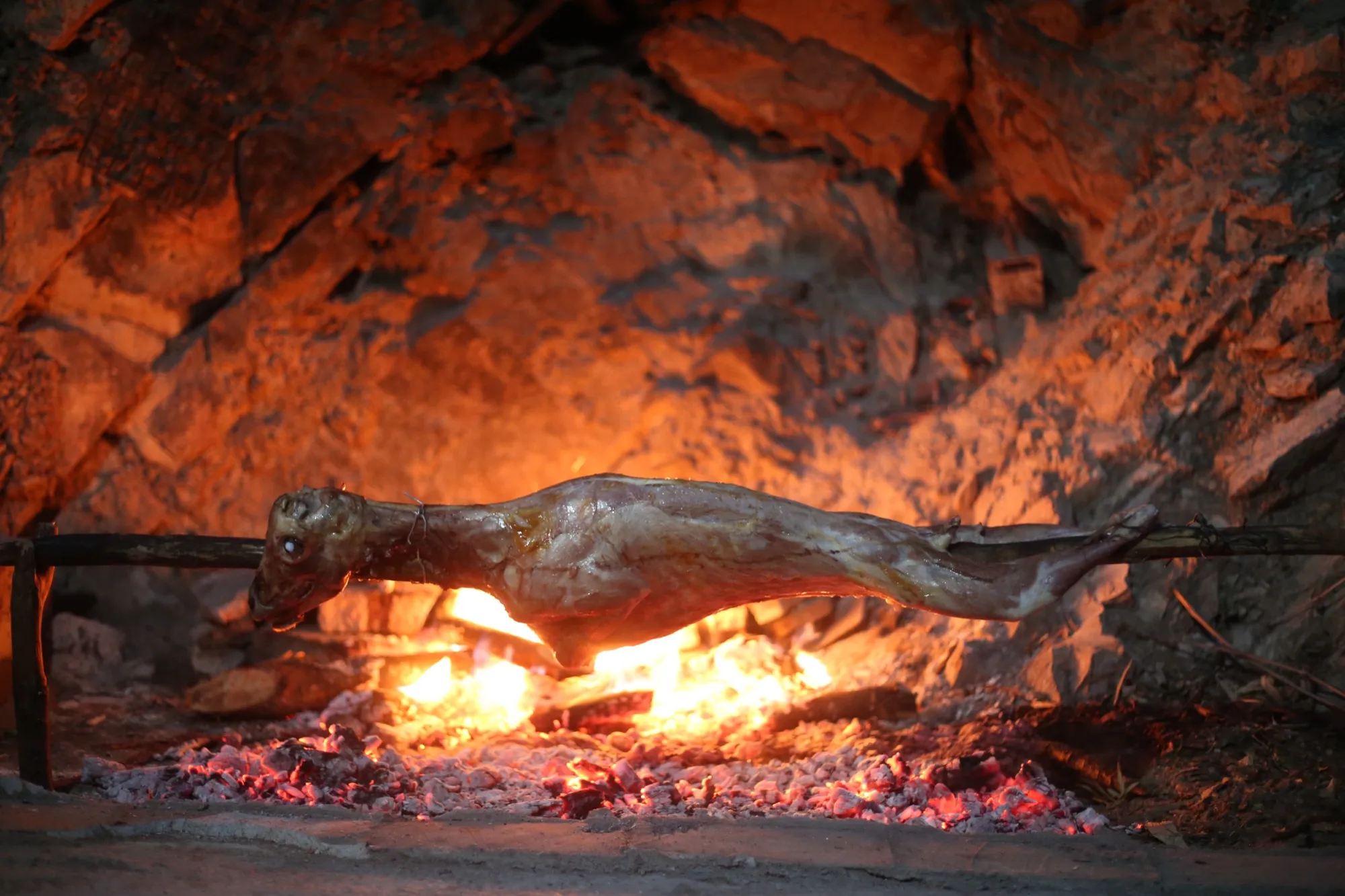
Albanian regional cuisine follows the shape of the land. The north, with its high mountains and cold winters, cooks with corn, beans, potatoes, dairy and dried meat. The centre, the flattest and most farmed part of the country, is the home of baked casseroles such as tavë kosi and fërgesë and of rich sweets. The south lives on olive oil, sheep’s milk, lamb, citrus and the fish of the Ionian Sea and its lakes. Within each zone almost every town has a dish of its own.
Why the cuisine changes from region to region
About three quarters of Albania is mountains and hills. The North Albanian Alps rise to about 2,700 metres, with forests and few people; the limestone ranges of the south are bare or covered in scrub and used mostly as pasture; and the western lowlands, about 200 km long, are the main farming area. The coast has a mild Mediterranean climate, while the east has a continental one with cold winters. Those differences decide what grows and what keeps through the winter.
Cookery writers usually divide Albanian food into three regions: north, centre and south. The division is a convention rather than a hard border. The river Shkumbin, which crosses the country near Elbasan, is roughly the line between the Gheg dialects of the north and the Tosk dialects of the south, and historians note that the two halves of the country long lived in different ways. No source we found ties the river to cooking directly, but it is a useful rough marker.
The north: corn, dairy and mountain meat
Northern cooking grew out of mountain villages and the lakes and lagoons of the coast. Corn was the staple, cold winters made dried meat essential, and garlic and onion go into almost everything. Beans, cabbage, potatoes, cherries and walnuts are common, and raki is distilled from plums.
- Flia (Kukës and the north-east). Layers of thin batter baked one at a time under a saç for two to three hours. Albania’s national inventory of intangible heritage records it as a dish of the Kukës area, made for Eid, Summer Day, family feasts and days of mourning. It is shared with Kosovo.
- Tavë krapi (Shkodër). Carp from Lake Shkodër, salted and fried, then baked in a sauce of onion, garlic and tomato with vinegar and dried plums. The lakeside villages of Shirokë and Zogaj are known for it, and the recipe is in the national inventory.
- Jufka (Dibër). Handmade ribbon pasta of hard wheat flour, milk and eggs, often cooked with chicken. It is in the Slow Food Ark of Taste. Dibër also has peppers with gjizë and beans with pastërma, dried meat.
- Mishavinë (Kelmend). A mountain cheese made only in summer by a few families in Lepushë, Vermosh and nearby villages, aged in wooden vessels sealed with butter. It is a Slow Food Presidium.
- Chestnuts (Tropojë and Malësi e Madhe). Tropojë has Albania’s largest chestnut forest, more than 2,200 hectares, used for soups and honey desserts. Since 2025 the chestnut of Malësi e Madhe has been protected as a geographical indication in the European Union.
- Kallmet (Zadrima). A native red grape grown around Shkodër and Lezhë. In Zadrima the farm restaurant Mrizi i Zanave serves it alongside jufka and other village dishes.
Further east, Mirditë is known for black cabbage with pork and dried meat, and Pukë for honey, mountain tea and dishes with nettles.
The centre: casseroles, poultry and sweets
Central Albania mixes plain, hills and coast, and has clear Mediterranean traits. Reference works credit it with meat specialities and sweets of every kind.
- Fërgesë (Tirana). Peppers, tomatoes and onion baked with gjizë in a clay dish, cooked across Tirana, Durrës, Kavajë and Elbasan. The version with liver is considered the more traditional in Tirana.
- Tavë kosi (Elbasan). Lamb and rice under a baked layer of yogurt and eggs, also called tavë Elbasani, and known in Turkey as Elbasan tava.
- Ballokume (Elbasan). Cornmeal cookies baked for Dita e Verës, the spring festival on 14 March. See our guide to Albanian desserts.
- Çomlek (Elbasan). Meat stewed slowly in a clay pot, with a name of Turkish origin. The area’s olive oil, Vaj Ulliri Valmi Elbasan, has been an EU-protected geographical indication since 2025.
- Gjel deti me përshesh (Myzeqe and the whole country). Roast turkey with përshesh, the main dish of New Year’s Eve. The Myzeqe plain, drained after the Second World War and once called the “granary of Albania”, is especially associated with it.
- The coast. Durrës is known for mussels with lemon, fish soup and squid, and for tavë lemi, a meat casserole with yogurt and eggs. Divjakë and the Karavasta lagoon supply eel, sea bass and shrimp.
- Berat. The UNESCO-listed Ottoman town is known for figs and olives, for tabosh, a lemon and nut cake, and for kabuni and japrakë.
The south: olive oil, sheep’s milk and the sea
The south combines field produce (dairy, citrus, olive oil) with seafood from the coast. The flocks of the southern pastures give a very thick sheep’s yogurt, especially around Gjirokastër, and raki here is made from grapes.
- Gjirokastër. Qifqi, rice balls with egg and dried mint fried in a copper pan with five or seven hollows; making that pan is itself in the national inventory. Also pasha qofte, meatballs in an egg and lemon soup, and oshaf, a pudding of sheep’s milk and dried figs.
- Përmet. Famous for gliko, whole fruit preserved in syrup, above all green walnuts, which is a Slow Food Presidium. Përmet also makes white wines, raki and goat pastërma, and Bedunica honey comes from the area.
- Korçë. The capital of pies: lakror baked under the saç, with a Lakror Festival every late summer in the villages of Polenë, Voskopojë and Boboshticë. Korçë also has kërnacka, grilled minced-meat sausages, pispili made with cornmeal and leeks, and Birra Korça, founded in 1928.
- Pogradec. The koran, the Ohrid trout found only in Lake Ohrid, is baked in a clay pot with red onion and walnuts. The species is endangered; Albania has a closed fishing season in winter and a hatchery at Lin restocks the lake.
- Vlorë and the Riviera. Sea bass, bream, squid, mussels from the gulf, pies with wild herbs, olive oil and wine. The Kalinjot olive is the classic variety of the area, and Vlosh wine comes from Narta. In Himarë, lamb on the spit and kukurec, grilled offal, open the meal.
- Butrint. Mussels have been farmed in the lagoon since the 1960s, peaking at 5,000 tonnes in 1989.
- Skrapar and Tepelenë. Skrapar is known for grape raki and pekmez, grape molasses; Tepelenë for petanik and a sour casserole of goat or lamb.
Regions at a glance
| North | Centre | South | |
|---|---|---|---|
| Landscape | High mountains, lakes, lagoons | Plains, hills, coast | Limestone mountains, pastures, Ionian coast |
| Staples | Corn, beans, potatoes, cabbage, dried meat | Lamb, poultry, vegetables, dairy | Olive oil, sheep’s milk, lamb, citrus, fish |
| Signature dishes | Flia, tavë krapi, jufka | Tavë kosi, fërgesë, gjel deti me përshesh | Qifqi, lakror, gliko, koran |
| Raki | Mostly plum | Grape and plum | Mostly grape |
| Notable products | Mishavinë, Malësi e Madhe chestnut, Kallmet | Elbasan olive oil, ballokume | Përmet gliko, Kalinjot olive, Butrint mussels |
Religion and regional food
Albanians are mostly Muslim, with Sunni and Bektashi communities, while Catholics live mainly in the north around Shkodër and Orthodox Christians in the south, in Gjirokastër, Korçë, Berat and Vlorë. The country has been largely secular since religion was banned in 1967. Sources link specific foods to faith only in specific places: Catholic women in Kelmend marked a cross on cornbread, the Orthodox of Narta use their Vlosh wine at festivals, the Muslim Gorani make millet boza, and in Pogradec chickpea bread carries a red egg at Easter and is served with halva at Eid. There is no simple rule that matches a religion with a regional diet.
Beyond Albania’s borders
Albanian regional cooking does not stop at the border. Kosovo’s cuisine is largely an expression of Albanian cuisine, with flia, pite and tavë Prizreni. In western North Macedonia, Albanians in the Prespa area bake lakror. The Arbëreshë, Albanians who settled in southern Italy centuries ago, keep their own versions in Calabria, Sicily and other regions, and the Cham Albanians of the far south brought a cuisine close to that of neighbouring Greece.
Frequently asked questions
What is the difference between northern and southern Albanian food?
The mountainous north cooks more with corn, beans, potatoes, cabbage, dairy and dried meat, with plum raki for the cold winters. The south relies more on olive oil, citrus, sheep's milk, lamb and seafood, and its raki is made from grapes.
Which Albanian town is best known for its food?
Several towns have a dish of their own: Elbasan for tavë kosi and ballokume, Tirana for fërgesë, Shkodër for baked carp, Korçë for lakror, Gjirokastër for qifqi and Përmet for gliko. There is no single food capital.
Does the Shkumbin river divide Albanian cuisine?
The Shkumbin is roughly the line between the Gheg dialects of the north and the Tosk dialects of the south. Sources use it for language and history, not for food, so it is only a rough guide to where cooking changes.
Is Kosovo food the same as Albanian food?
Kosovan cuisine is largely an expression of Albanian cuisine and shares dishes such as flia and pite with northern Albania, with local specialities like tavë Prizreni.
Sources
- Albania: Land, Encyclopaedia Britannica
- Albania: People, Encyclopaedia Britannica
- Albanian traditional cuisine, where east meets west, Tirana Times (2014)
- Traditional dishes, National Inventory of Intangible Cultural Heritage of Albania
- Traditional flia, National Inventory of Intangible Cultural Heritage of Albania
- Tavë korani, National Inventory of Intangible Cultural Heritage of Albania
- Artisanal making of the qifqi pan, National Inventory of Intangible Cultural Heritage of Albania
- Mishavinë, Slow Food Presidium
- Përmet Gliko, Slow Food Presidium
- Ark of Taste: Albania, Slow Food Foundation
- Jufka, Ark of Taste, Slow Food Foundation
- From chestnut forests to rural prosperity in Tropojë, FAO (2026)
- Restocking efforts maintain a valuable fishery, Eurofish Magazine (2015)
- The Curious Case of Albanian Mussel Exports, Harvard Growth Lab (2015)
- Commission Implementing Regulation (EU) 2025/1343, Gështenja e Malësisë së Madhe
- Commission Implementing Regulation (EU) 2025/2172, Vaj Ulliri Valmi Elbasan
- Historic Centres of Berat and Gjirokastra, UNESCO World Heritage
- Tavë krapi of Shirokë and Zogaj, National Tourism Agency of Albania
- Albanian cuisine, Wikipedia
- Kosovan cuisine and Arbëreshë cuisine, Wikipedia