Albanian Desserts: A Guide to Traditional Sweets
Albanian desserts explained: bakllava and other syrup sweets, puddings, ballokume, Përmet gliko and trileçe, with when each is eaten and where it comes from.
Published
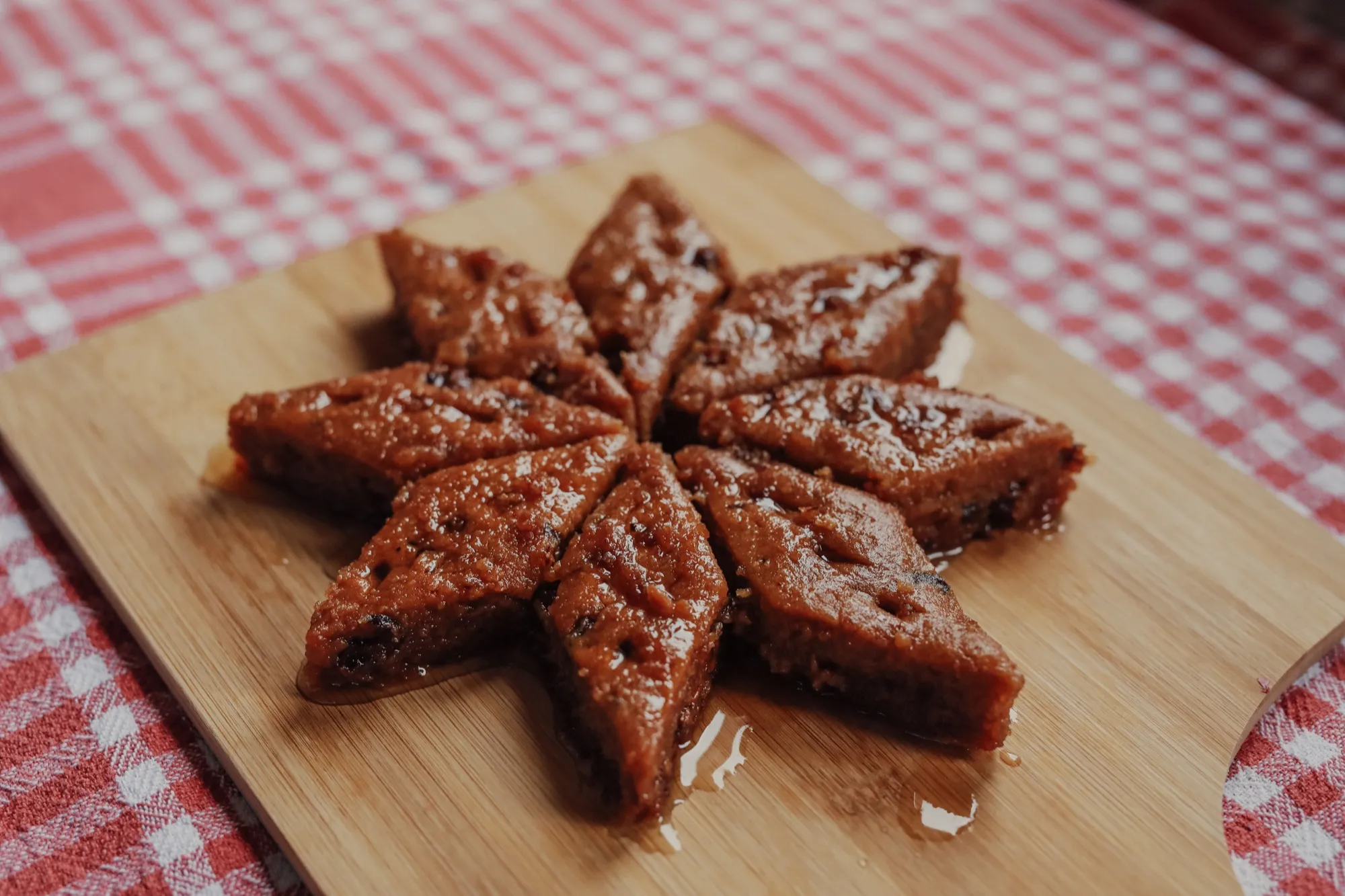
Albanian desserts are mostly sweets of the Ottoman tradition: thin layers of pastry or soft semolina cakes soaked in sugar syrup, such as bakllava, kadaif and revani. Around them sit milk and rice puddings, cornmeal cookies like ballokume from Elbasan, whole fruit preserved in syrup called gliko, and one modern hit, trileçe. Most of them belong to a moment in the year (New Year, Bajram, the spring festival of Dita e Verës) or to the habit of offering something sweet to anyone who walks through the door.
Where Albanian sweets come from
Albania was part of the Ottoman Empire from the 15th century until independence in 1912, and its kitchen kept a great deal from that period. Paper-thin pastry, nuts and syrup became everyday ingredients, which is why so many Albanian desserts share their names with Turkish, Greek, Bosnian or Bulgarian ones. Food writers stress that influence ran in more than one direction, and the shared heritage remains sensitive: who “owns” baklava is still argued over across the region.
The 20th century added other layers. Italian influence grew after 1912, and today every Albanian town has pastry shops (pastiçeri) that sell cream cakes next to the syrup sweets, while ice cream (akullore) is eaten all year round. Under communism food was rationed and many family recipes were lost, yet some festive sweets survived because families kept making them for the holidays.
Syrup sweets: bakllava and its family
Albanians call these ëmbëlsira me sherbet, sweets with syrup. The syrup is usually sugar and water, sometimes with lemon or cloves, poured over the cake so it soaks in.
Bakllava
Albanian bakllava is built from many sheets of very thin pastry, often rolled at home, brushed with butter and layered with crushed walnuts. Some families use hazelnuts or almonds instead. It is cut into diamonds before baking, and warm syrup is poured over as soon as it leaves the oven.
In Albania bakllava is above all the New Year dessert. Preparation traditionally started days in advance, and during the communist decades, when 31 December was the main family celebration, households put money aside to make it. It also appears at the religious holidays of all three faiths. In Prizren, in neighbouring Kosovo, a Bajram lunch without baklava is considered incomplete.
Where baklava was born is not settled. One view places the dish as we know it in the kitchens of the Ottoman palace in Istanbul, whose records mention it in the 1470s. Another, popular in Greece, points to the layered cakes of ancient Greece and Byzantium. The food historian Charles Perry linked it to the layered breads of the Turkic peoples of Central Asia. Each country around the eastern Mediterranean makes its own version, and none of the theories has been proved.
Kadaif
Kadaif uses shredded dough instead of sheets. The strands are wrapped or layered around walnuts, baked until crisp and soaked in lemon syrup. The name appears in Ottoman texts as early as the 15th century. In Albania kadaif is a common alternative to bakllava at New Year, often flavoured with cloves.
Revani
Revani is a soft cake of semolina or flour, eggs and butter, drenched in syrup and often scented with citrus. Albania’s National Tourism Agency lists it among the holiday favourites, especially in Tirana. Its name has two explanations: Turkish dictionaries derive it from a Persian word for oil or butter, while a popular story ties it to Revan (today’s Yerevan) and an Ottoman campaign there in the 17th century. A similar recipe already appears in a 13th-century cookbook from Muslim Spain.
Sheqerpare, shëndetlie and tullumba
- Sheqerpare are small semolina cookies baked and then soaked in syrup. The Turkish original, şekerpare, means “piece of sugar” and is documented from the 19th century.
- Shëndetlie is a dense cake of honey, eggs, walnuts and butter, scored into diamonds and finished with syrup. Reference works list it as an Albanian sweet, but its written history is thin.
- Tullumba are ridged fingers of fried dough dropped into syrup. The name comes from the Ottoman Turkish word for “pump”, itself borrowed from the Italian tromba; in Turkey it is a classic sweet for Ramadan evenings.
Puddings of milk, rice and grain
- Sultjash is rice pudding with cinnamon, the Albanian cousin of the Turkish sütlaç. In Kosovo it is often called tamëloriz, “milk and rice”.
- Kabuni is rice fried in butter and cooked with sugar, raisins, cinnamon and cloves. Sources disagree on the details: an older version recorded for Krujë uses mutton broth and is served cold, while the National Tourism Agency describes a meatless, warm version typical of Korçë and Devoll, made for family celebrations and as a winter dessert.
- Ashure is a pudding of wheat, beans, dried fruit and nuts, linked to the legend of Noah’s ark. For Albania’s Bektashi community it is a sacred dish: after the ten-day Matem fast, it is cooked for hours and shared to commemorate Imam Husayn and the martyrs of Karbala.
- Oshaf is a speciality of Gjirokastër: sheep’s milk slowly thickened with sugar and served lukewarm or cold, especially in summer. Some descriptions add dried figs and cinnamon, others almonds.
- Qumështor is a baked custard of milk, eggs and sugar, without pastry. It belongs to the Orthodox calendar, though sources differ on the moment: some link it with Easter, others with the days just before Lent.
- Hallvë is the Albanian halva: flour or semolina toasted in oil and cooked with sugar, often with nuts. The word reached Albanian through Ottoman Turkish from Arabic.
Cookies, pastries and fried dough
Ballokume and the spring festival
Ballokume is the sweet of Elbasan. It is a crumbly cookie of corn flour, butter, sugar and eggs, traditionally beaten by hand for a long time in a copper bowl and then baked. Families bake it for Dita e Verës (Summer Day), the spring festival held on 14 March, and exchange it with neighbours and relatives.
Dita e Verës is of pagan origin and Elbasan is considered its home. People light bonfires and tie a red-and-white cord, the verore, around their wrists. It has been an official public holiday in Albania since 2004. A local legend says the cookie got its name when an Ottoman governor of Elbasan tasted it and said it was as good as llokume, Turkish delight. Historians treat this as folk etymology.
Kurabie, kulaç and petulla
Kurabie are shortbread cookies, a name shared across the former Ottoman lands. Kulaç is a name used for festive breads and cakes; the National Tourism Agency records a wedding custom in which a new bride bakes small corn-flour kulaç with butter a couple of weeks after the wedding. Petulla, puffs of fried yeast dough, sit between sweet and savoury: they are dusted with sugar, spread with jam or eaten with white cheese.
Gliko: a spoonful for the guest
Gliko is whole fruit preserved in thick syrup, and the town most closely tied to it is Përmet in the south. The best known is made from green walnuts, picked green in the first half of June, soaked for about forty days and then cooked with sugar in copper pots, with lemon added at the end. Përmet also makes gliko from white cherries, plums, figs, apricots and even aubergines.
A guest entering a home in Përmet is offered gliko straight away. Across the Balkans spoon sweets are traditionally served on a small dish with a teaspoon, next to coffee and a glass of cold water. Përmet gliko is protected as a Slow Food Presidium and walnut gliko is listed in Albania’s national inventory of intangible cultural heritage.
Trileçe: a 21st-century classic
Trileçe is a light sponge soaked in a mix of milk and cream and topped with caramel. The name comes from the Spanish tres leches, “three milks”, and the cake is related to the Latin American dessert of the same name. In twenty years it has become one of the most popular sweets in Albania, Kosovo, North Macedonia, Serbia, Bosnia and Turkey.
How it got there is disputed. A widely repeated story, reported in the Turkish press, says Albanians discovered it through Latin American soap operas popular in the 1990s. A 2024 investigation by the Balkan magazine Kosovo 2.0 found a more precise trail: a tres leches with whipped cream was served in a Tirana restaurant in 2002 without much success, and the caramel-topped version was improvised in another Tirana kitchen in 2005 by an Italian chef. By 2007 it was everywhere in Albania; it reached Kosovo and North Macedonia at about the same time and Istanbul by the end of 2008. Our trileçe recipe follows the caramel version.
When Albanians eat sweets
| Occasion | Typical sweets | Notes |
|---|---|---|
| New Year (31 December) | Bakllava, kadaif | The main family feast of the year, especially during communism |
| Bajram (Eid) | Bakllava and other syrup sweets | Shared during family visits |
| Dita e Verës (14 March) | Ballokume | Spring festival rooted in Elbasan |
| Ashure (Bektashi) | Ashure pudding | Cooked and shared after the Matem fast |
| Orthodox Easter and the start of Lent | Qumështor | Sources differ on which of the two |
| Weddings | Syrup sweets, honey, kulaç | Sweets welcome the guests and the bride |
| Any visit | Gliko, llokume, coffee | The first thing offered to a guest |
Shared names, local versions
If you know Turkish, Greek or Bosnian sweets, many Albanian ones will look familiar. The differences are in the details: hand-rolled pastry for bakllava, corn flour in ballokume, sheep’s milk in oshaf, the green walnuts of Përmet. Those small choices, and the occasions they belong to, are what make these desserts Albanian.
Frequently asked questions
What is the most traditional Albanian dessert?
Bakllava, the Albanian baklava made with thin pastry, walnuts and syrup. It is the classic New Year dessert in Albania and is also made for religious holidays.
Is trileçe an Albanian dessert?
Its name and idea come from the Latin American tres leches cake, but the caramel-topped version known across the Balkans and Turkey spread from Tirana in the mid-2000s. A popular story credits Latin American soap operas; a 2024 investigation by Kosovo 2.0 traces it to Italian chefs working in Tirana restaurants.
What is ballokume?
A crumbly cookie from Elbasan made with corn flour, butter, sugar and eggs. It is baked for Dita e Verës, the Albanian spring festival on 14 March.
Are Albanian desserts the same as Turkish or Greek ones?
Many share a common Ottoman past and similar names, such as baklava, kadaif and revani. The details change from country to country, and some sweets, like ballokume or Përmet gliko, are tied to specific Albanian towns.
What dessert do Albanians serve to guests?
Traditionally a spoonful of gliko, whole fruit preserved in syrup, or a piece of llokume (Turkish delight) with coffee. For holidays the host brings out a tray of bakllava or another syrup sweet.
Sources
- Baklava, Encyclopaedia Britannica
- The Sticky History of Baklava, Smithsonian Magazine (2023)
- Albania's Resurging Cuisine, AramcoWorld (2024)
- Ignazio's spell: how trileçe spread across the Balkans, Kosovo 2.0 (2024)
- Trileçe hakkında konuşmalıyız, Hürriyet (2015, in Turkish)
- Përmet Gliko, Slow Food Presidium, Slow Food Foundation for Biodiversity
- Walnut gliko, National Inventory of Intangible Cultural Heritage of Albania
- Ballokume, National Tourism Agency of Albania
- Kabuni, National Tourism Agency of Albania
- Baklava, kadaif, revani, National Tourism Agency of Albania
- Oshaf, National Tourism Agency of Albania
- Summer Day, a unique festive day of Albania, Visit Tirana
- New Year's Eve tradition in Albania, Visit Tirana
- Feast of Ashura, Bektashi World Headquarters (2021)
- Albanian cuisine, Wikipedia
- Baklava, Wikipedia
- Basbousa (revani), Wikipedia
- Kabuni, Wikipedia
- Robert Elsie, Albania, Countries and Their Cultures