Trileçe: Balkan Three Milk Cake with Caramel
A soft Albanian trileçe recipe: light sponge soaked in three milks and topped with homemade caramel. Best made the day before.
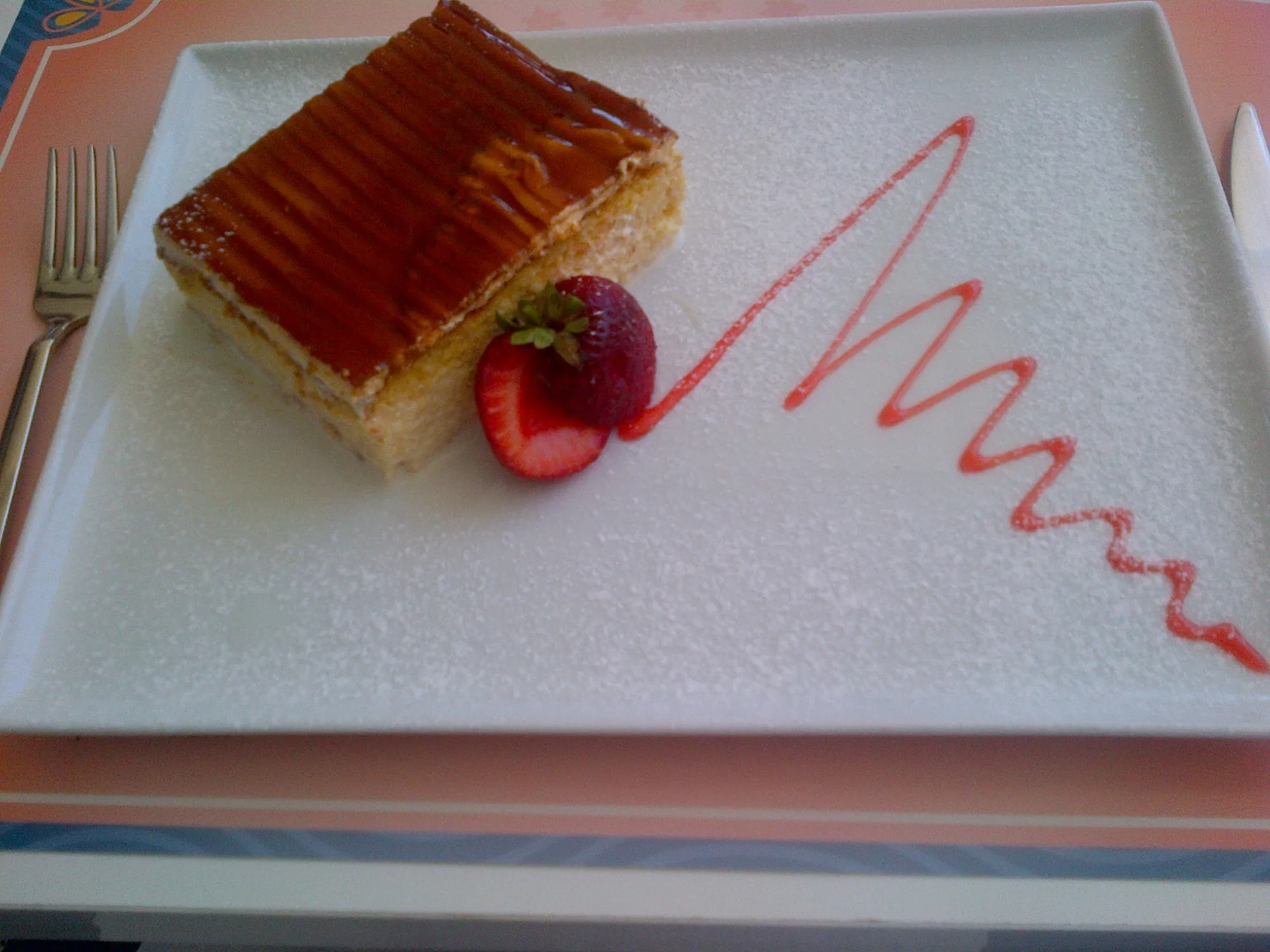
- Prep30 min
- Cook45 min
- Rest4 h
- Serves12
- DifficultyMedium
Ingredients
For the sponge
For the three milks
For the caramel
Method
- Heat the oven to 170°C (340°F). Butter a baking dish of about 25 x 35 cm (10 x 14 in).
- Beat the eggs with the sugar and vanilla with an electric mixer for 8 to 10 minutes, until pale and tripled in volume.
- Sift the flour with the baking powder and fold it in three additions with a spatula, from the bottom up, so the batter does not deflate.
- Pour into the dish and bake for 30 to 35 minutes, until a toothpick comes out clean. Do not open the oven during the first 20 minutes.
- Let the sponge cool for 10 minutes, then prick it all over with a fork.
- Mix the milk, cream and condensed milk. Pour slowly over the sponge, a little at a time, until it has all been absorbed.
- For the caramel, melt the sugar in a dry pan over medium heat, without stirring with a spoon, until amber. Take it off the heat.
- Carefully add the warm cream (it will bubble up), then the butter and salt. Return to low heat for 1 to 2 minutes, stirring, until smooth.
- Let the caramel cool for 10 minutes and spread it over the cake. Chill for at least 4 hours, ideally overnight.
Background and tips
Trileçe has become one of the most loved desserts in Albania and across the Balkans. The name comes from the Spanish tres leches, “three milks”, and describes exactly what makes it special: a light sponge that drinks up three kinds of milk.
How many eggs? Recipes in circulation range from 6 to 10 eggs. With 6 eggs and a 25 x 35 cm dish you get a cake that is tall enough and absorbs the liquid well. For a larger tray, scale all the ingredients in the same ratio.
The caramel. The cream must be warm when you add it, otherwise the sugar seizes. If that happens, keep it on low heat and stir until it melts again.
Patience pays off. Trileçe is better the next day, once the milks have spread evenly through the sponge.