Albanian Christmas and New Year Food
What Albanians eat at Christmas and New Year: roast turkey with përshesh, bakllava, kadaif and the Christmas Eve log, with the history and the recipes.
Published
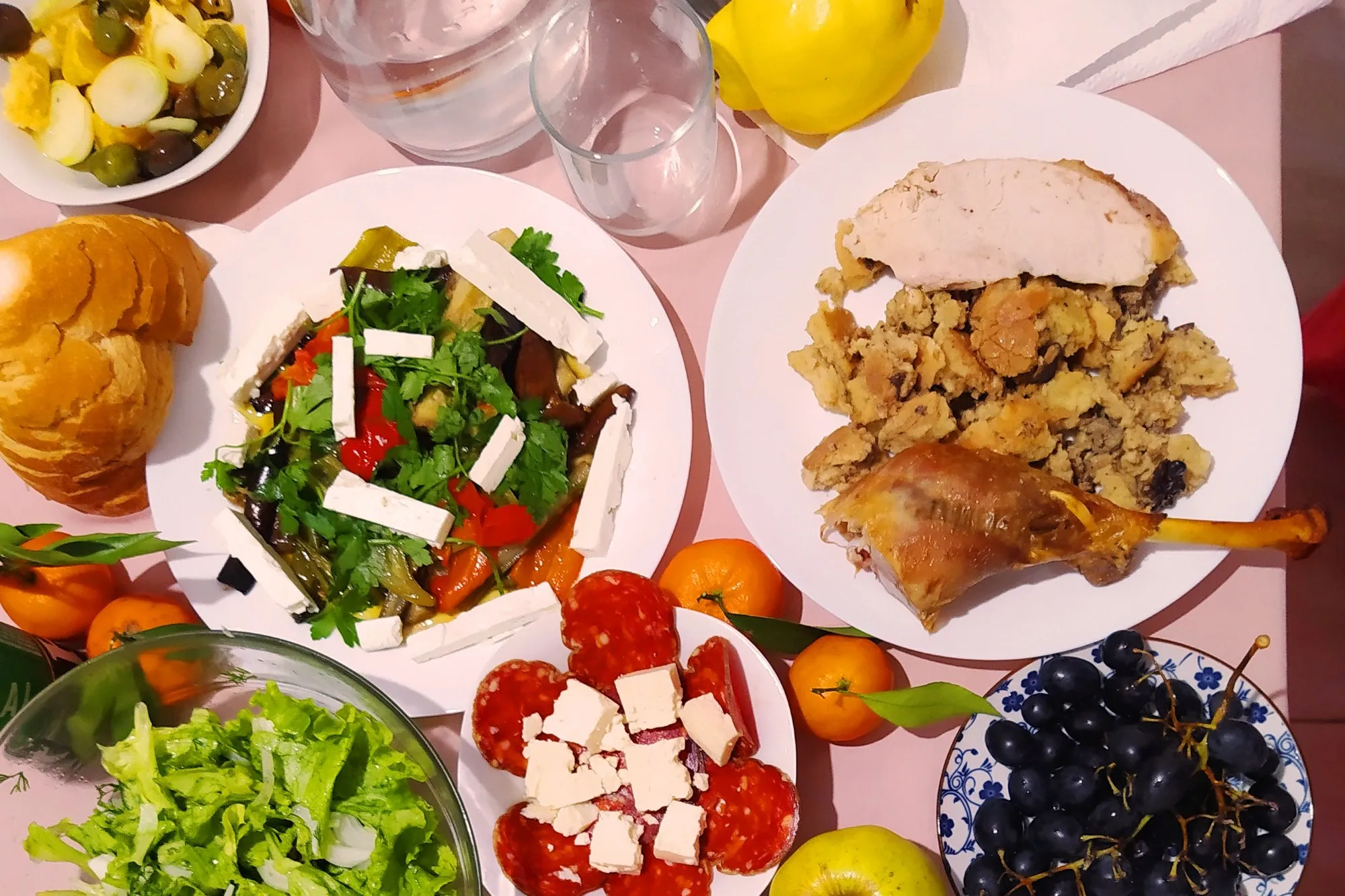
In Albania the big winter feast is New Year’s Eve: roast turkey (gjel deti) with përshesh, a bread side soaked in the turkey’s broth, followed by bakllava made days in advance. Christmas on 25 December is a public holiday and matters to Christian families, but for most Albanians the family table of 31 December is the one that counts, a habit that took root when religion was banned from 1967 to 1990. Below are the dishes, why they became the holiday menu, the older Christmas Eve customs, and our recipes to cook them.
Why New Year’s Eve is the big night
In 1967 the communist regime launched a campaign against religion: churches and mosques were closed or destroyed, and no religious holiday was celebrated for more than two decades. Visit Tirana notes that the last Christmas greeting in the state archives is a telegram from 1966, and that under the dictatorship 31 December was the most festive day of the year. BunkArt, the museum in Tirana’s former bunker, explains that the decorated tree survived as the “New Year tree”, with paper chains and cotton wool for snow.
The ban on religious observance was lifted officially in December 1990, and public religious holidays came back in the early 1990s. Today Albania’s public holidays include 1 and 2 January for New Year and 25 December for Christmas, along with the two Bajram feasts, whose dates move each year. Yet, as Shqiptarja.com wrote in 2022, the New Year dinner still counts for more than Christmas in most homes, and keeps many customs born in the socialist years: decorated windows, the tree, presents and cards.
The New Year’s Eve table
Gjel deti me përshesh
Roast turkey has always been the main dish of the night, according to Visit Tirana. Shqiptarja.com calls the turkey the “sacrificed king of the table” and notes that in Tirana the most sought-after birds come from Baldushk, on the edge of the city. It is roasted, or sometimes fried, and served with përshesh: bread soaked in the bird’s broth with onion and baked until it absorbs the juices.
The sources disagree on which bread. Shqiptarja.com describes crumbled kulaç, a wheat bread; Visit Tirana describes a baked cornbread, flattened and soaked. Both are Albanian, and families keep their own version. Our gjel deti me përshesh gives exact timings for a whole bird and for the përshesh.
Bakllava, made days before
Visit Tirana says New Year preparations start about a week ahead, and they start with the bakllava. Layers of thin pastry, walnuts and butter, cut into diamonds and soaked in syrup, it is the first thing to be made. Shqiptarja.com adds that bakllava and kadaif are usually made at home days in advance, although many families now order them from a pastry shop. Wikipedia notes that baklava is also made around the religious holidays of Muslims, Catholics and Orthodox Christians, so the same tray turns up at Bajram as well.
- Bakllava, with walnuts and butter.
- Kadaif, the shredded-pastry cousin, which the National Tourism Agency lists among Tirana’s best-loved sweets.
Around the turkey
Shqiptarja.com describes Russian salad, potatoes, carrots and peas in mayonnaise, as a fixture of the New Year table. Visit Tirana adds regional differences: in Gjirokastër families prefer a meat pie and lakror, while on the coast and around the lakes the table leans towards fish and seafood, for which our tavë peshku is a good centrepiece.
Other syrup cakes complete the dessert tray. The National Tourism Agency calls revani, a semolina cake soaked in syrup, a favourite festive dessert, and shëndetlie, a honey and walnut cake, belongs to the same family. Our guide to Albanian desserts explains each one.
New Year’s Day
On 1 January people visit relatives and friends, bringing sweets, drinks and fruit, according to Visit Tirana, which also notes that more families now celebrate in restaurants or abroad, or try new dishes at home. Shqiptarja.com records a belief still told in many families: the first visitor to cross the threshold on 1 January decides the luck of the year. The same newspaper describes lentils, pomegranates and twelve grapes as foreign customs that have recently arrived, not Albanian ones.
Christmas Eve: the log and the kolendra
Older customs survive among Christian families and in village memory. A 2020 study by Aida Zoto and Helena Lubonja of Kolegji Universitar Logos describes how, on Christmas night, the head of the household puts a large log on the fire. In the north it is called buzmi or buzëm; in the south names include trungu i Kërshëndellave and kërcuri i Vitit të Ri. In some areas bread and cheese are set on one end of the log and a glass of raki on the other, and the family reads omens for the vineyard and the flock from the way the log burns.
The same study describes the kolendra: songs sung on 24 December, and also the name of small kulaç breads in different shapes baked for the singers. Those who go from house to house singing receive kulaç, dried figs, walnuts, oranges and petulla. The name changes by area: kolendra around Korçë, Kolonjë, Përmet and Myzeqe, kullakë in Pogradec and Berat, kullana in Shkodër.
We found no reliable source describing a set Christmas Eve fasting menu for Albanian Catholics or Orthodox Christians, so we do not give one.
In Kosovo
Kosovo keeps 1 and 2 January as public holidays and marks both Catholic Christmas on 25 December and Orthodox Christmas on 7 January. Prishtina Insight describes a New Year celebrated over three evenings, one with family, one with friends and one with colleagues, with a decorated tree in almost every home, even though Catholics are a small minority. The tables are described as overflowing, but we found no reliable source naming specific Kosovar New Year dishes. Our guide to Kosovo food covers the everyday cooking.
Melomakarona and other newcomers
Melomakarona, honey and walnut cookies, are a Greek Christmas sweet, eaten together with kourabiedes, according to Wikipedia. There is a melomakarona recipe on the site, but we found no source documenting how widespread it is in Albania, so we do not present it as an Albanian tradition.
A holiday menu from our recipes
A New Year’s Eve you can cook from cibo.al:
| When | Dish | Recipe |
|---|---|---|
| A week before | Bakllava | Bakllava |
| Two or three days before | Kadaif or revani | Kadaif, revani |
| 31 December, morning | Turkey into the oven | Gjel deti me përshesh |
| 31 December, evening | Pie for the table | Lakror or spinach byrek |
| On the side | Pickles and cheese | Turshi, see also our guide to Albanian cheese |
| To drink | Raki or wine | See our guide to Albanian drinks |
The timings in the first column follow Visit Tirana’s account of starting with the bakllava a week ahead; the rest is our suggestion for organising the cooking, not a fixed tradition.
Frequently asked questions
What do Albanians eat on New Year's Eve?
The centre of the table is roast turkey, gjel deti, served with përshesh, a bread side soaked in the turkey's broth. Bakllava is the dessert, often made days in advance, and kadaif and Russian salad are common too.
Is Christmas or New Year more important in Albania?
For most families New Year's Eve is the bigger feast. Religion was banned from 1967 until December 1990, and during those decades 31 December became the main family celebration, with its own tree and gifts. Christmas, 25 December, is now a public holiday as well.
What is përshesh?
A side dish of bread soaked in the broth of the turkey with onion, baked until it soaks up the juices. Sources disagree on the bread: Shqiptarja.com describes crumbled kulaç, a wheat bread, while Visit Tirana describes a flattened baked cornbread.
What is the Christmas Eve log in Albania?
On Christmas night the head of the household puts a large log on the fire, called buzmi or buzëm in the north and by names such as kërcuri in the south. A 2020 study by Aida Zoto and Helena Lubonja describes food and drink placed beside it and omens read from the burning log.
When should I start cooking for the Albanian New Year?
Visit Tirana says preparations begin about a week before, starting with the bakllava. The turkey and përshesh are cooked on 31 December.
Sources
- New Year's Eve tradition in Albania, Visit Tirana
- Jakimi, Traditat e pandryshuara në ndërrimin e viteve, Shqiptarja.com (31 December 2022)
- Viti i Ri 2023, ritet dhe besëtytnitë për fat, Shqiptarja.com (31 December 2022)
- Albania's New Year tree of the dictatorship era, BunkArt
- Çibuku, Easter in Albania, between faith and memory, OBC Transeuropa (2026)
- Religion in Albania, Wikipedia
- Public holidays in Albania, Wikipedia
- Public holidays in Kosovo, Wikipedia
- Bytyçi, Three Days of New Year Festivities, Kosovo's Unique Tradition, Prishtina Insight (2023)
- Zoto, Lubonja, Ndikime socio-kulturore shqiptare dhe greke në zakone dhe tradita të Krishtlindjeve e Vitit të Ri, Kolegji Universitar Logos (2020)
- Baklava, Kadaif, Revani, National Tourism Agency of Albania
- Albanian cuisine, Wikipedia
- Melomakarono, Wikipedia