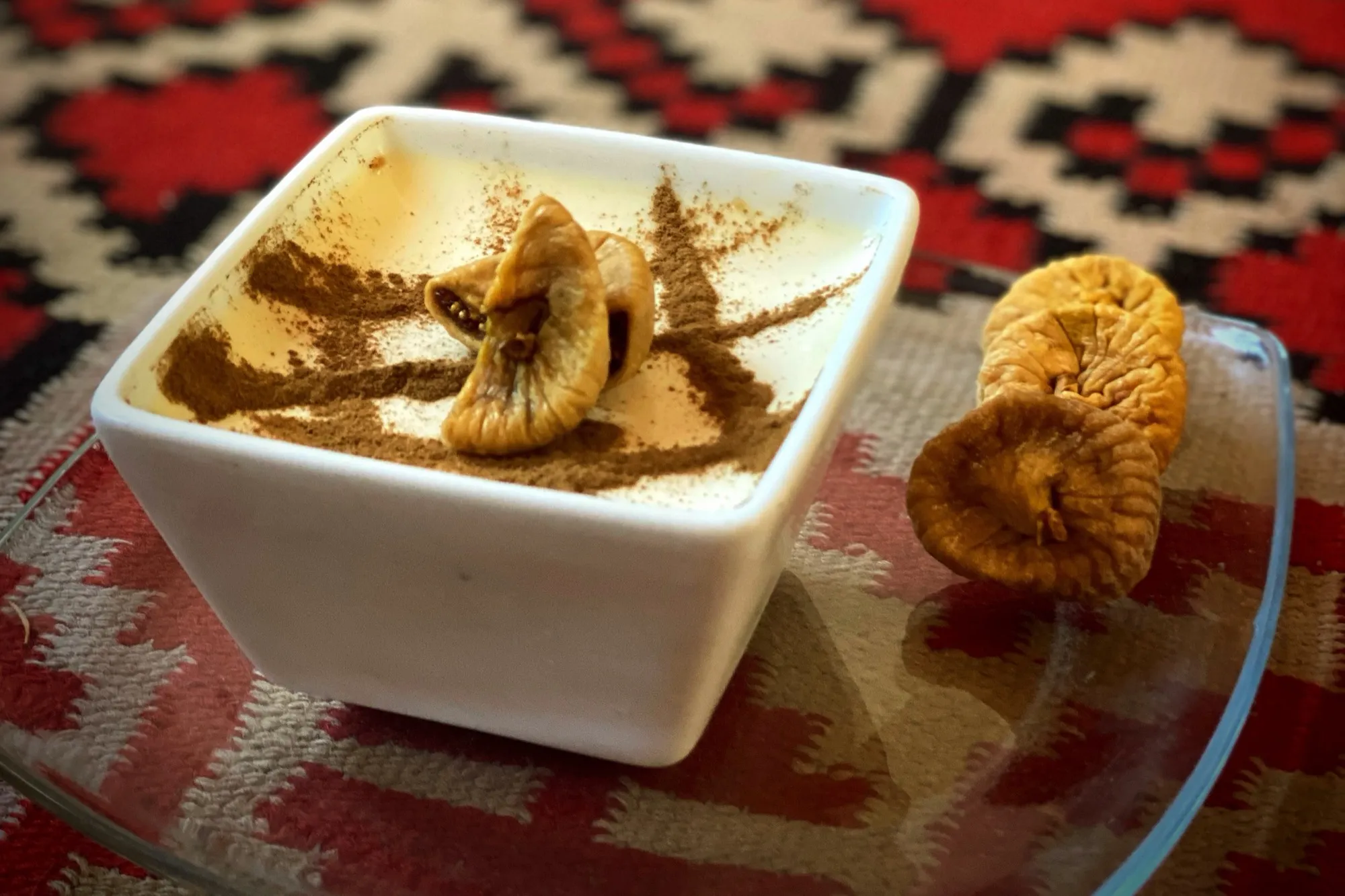
Oshaf: Gjirokastër Sheep's Milk and Fig Pudding
Oshaf recipe: the pudding of Gjirokastër, sheep's milk with ground dried figs and sugar, baked gently in cups in a water bath until set. Cold, with cinnamon.
- Prep15 min
- Cook1 h 10 min
- Rest3 h
- Serves6
- DifficultyEasy
Ingredients
Method
- Remove the stems from the figs and chop them very finely with a knife or in a food processor, until almost a paste. If the figs are hard, soak them in boiling water for 10 minutes first and drain well.
- Bring the milk to the boil in a heavy-based pan over medium-low heat, stirring so it does not catch on the bottom. Take it off the heat.
- Stir in the sugar until dissolved and leave the milk to cool for 15 to 20 minutes, until it is warm, like milk for making yogurt: you can keep a finger in it for a few seconds. Heat the oven to 120°C (250°F).
- Add the chopped figs to the milk and mix well. Divide among 6 ovenproof cups or ramekins.
- Set the cups in a deep roasting tin and pour hot water into the tin to come halfway up their sides. Bake at 120°C (250°F) for 1 hour without moving them, until the milk has set like yogurt: when you nudge a cup, the surface wobbles but does not run.
- Lift the cups out of the water, leave them to cool at room temperature, then cover and refrigerate for 2 to 3 hours.
- Dust with cinnamon before serving and, if you like, a little ground clove.
Background and tips
Oshaf (say “OH-shahf”) is the pudding of Gjirokastër, the stone-built town in southern Albania: sheep’s milk with ground dried figs and sugar, baked gently in cups until it sets and eaten cold with cinnamon. Albania’s National Tourism Agency links it to the town’s shepherding tradition and describes it as a sweet for guests; it is also spelled hoshaf. Gjirokastër is just as known for qifqi, fried balls of rice, egg and mint. Other Albanian milk puddings are in our guide to Albanian desserts.
Why it sets without flour or eggs. None of the Albanian recipes we read uses flour, starch, eggs or butter: just milk, figs and sugar. The most likely explanation is the fig itself. Figs contain an enzyme, ficin, that curdles milk like rennet and is even used to make some cheeses, and a Turkish pudding of warm milk and dried figs sets in the same way. That is why the figs go into warm rather than boiling milk, and why the cups are not moved while they bake.
Cold or warm? The National Tourism Agency says oshaf is eaten lukewarm or cold, especially in summer. Made with dried figs, it works all year round, and some recipes written abroad suggest serving it warm in winter. Sheep’s milk is richer and gives a softer pudding; with whole cow’s milk the result is lighter.
Variations and names. In a 2020 recipe, the Albanian cook Zonja Katerina does not bake it at all: she covers the warm milk and figs and leaves it for 3 to 4 hours, like yogurt. The tourism agency also mentions almonds. In Turkish, hoşaf is a compote of dried fruit in water, the same word for a different dish, and in the highlands near Shkodër, according to one recipe, “oshaf” is a cake made with dried figs.