Hasude: Albanian Caramel and Cornstarch Pudding
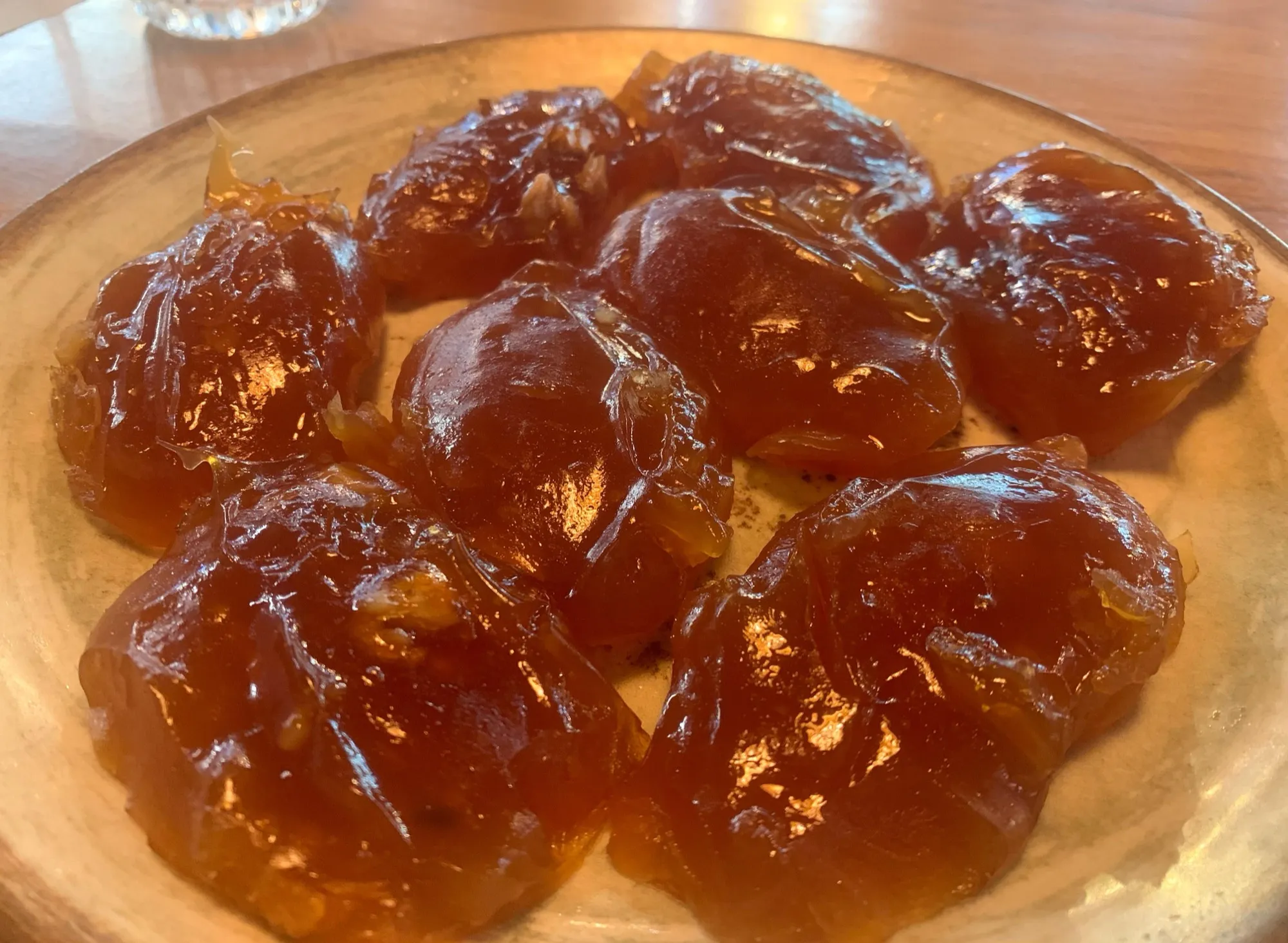
Hasude recipe: Albanian cornstarch sweet cooked with caramelised sugar and butter until glossy and set, shaped with spoons. Plain or with walnuts and cinnamon.
- Prep10 min
- Cook25 min
- Rest1 h
- Serves10
- DifficultyMedium
Ingredients
For hasude with walnuts
Method
- Stir the cornstarch into 250 ml (1 cup plus 1 tbsp) of cold water until there are no lumps at all. Keep a bowl of cold water and two spoons nearby, or butter a tin of about 20 x 20 cm (8 x 8 in).
- Put the sugar in a wide, heavy-based pan over medium heat. Let it melt without stirring, just swirling the pan, until it turns a golden caramel brown, about 6 to 8 minutes. Do not let it get too dark, or it turns bitter.
- Take the pan off the heat and slowly pour in the remaining 250 ml (1 cup plus 1 tbsp) of hot water, keeping your hand well back: the caramel will foam and spit. Return to low heat and stir until the caramel has fully dissolved. Add the butter and let it melt.
- Stir the cornstarch mixture again, as it settles, and pour it into the pan in a thin stream, stirring all the time with a wooden spoon.
- Keep stirring without stopping over low to medium heat for 10 to 15 minutes. It thickens quickly; it is ready when it turns translucent and glossy, lets the butter out at the edges and comes away from the sides of the pan.
- For hasude with walnuts, add the walnuts now and stir for 1 more minute so they spread through the mixture.
- Dip the two spoons in water and scoop pieces the size of a large walnut onto a plate, side by side, wetting the spoons whenever the mixture sticks. Or pour it all into the tin and smooth the top with a wet spoon.
- Leave to cool for at least 1 hour. If you used a tin, cut it into pieces. Dust with cinnamon just before serving.
Background and tips
Hasude (say “hah-SOO-deh”) is a home-made Albanian sweet of cornstarch, sugar and butter, cooked on the stove until thick, translucent and glossy, then shaped with spoons or set in a tin and cut into pieces. Some recipes call it reshedi. Albania’s National Tourism Agency lists it among the traditional sweets of Berat, together with kabuni, and among those made in Kukës for celebrations and family gatherings. The recipes we found come from Mat, Myzeqe and Kosovo, with small differences between them. More home-made sweets are in our guide to Albanian desserts.
Hasude with walnuts. This is the most common form in written recipes. The walnuts are broken or coarsely chopped and stirred in once the mixture has thickened, at the end of cooking, so they stay crisp. The usual amount is about 100 g for 300 g of cornstarch; a recipe from Mat, made with oil instead of butter, uses twice as many and grates more on top when serving. Some cooks use almonds instead, others walnuts with raisins.
Caramel or not? Most recipes start by caramelising the sugar, which gives hasude its brown colour and a faintly burnt taste. Others toast the cornstarch in butter first and then add sugar and water, which makes a paler, slightly grainy sweet. Hasude is not the same as Albanian halva, where flour is toasted in fat and then soaked in syrup: here the starch cooks in the sweet liquid until it sets like a jelly. Turkey has sweets with similar names, but they are usually made with grape molasses and flour, so they are different dishes.
Mistakes to avoid. The cornstarch must be fully dissolved in cold water, or it forms lumps. While it cooks, the mixture has to be stirred constantly, because it thickens fast and catches on the bottom. Hot, it also sticks to spoons and fingers, which is why the spoons are dipped in water. Some recipes sprinkle sugar over the tin and put it in the oven for 10 to 15 minutes; another replaces half the water with orange juice.