Lighter Albanian Dishes: Less Fat and Salt
How to make tavë kosi, byrek and fërgesë with less butter, saturated fat and salt without losing the dish, with WHO and USDA figures.
Published
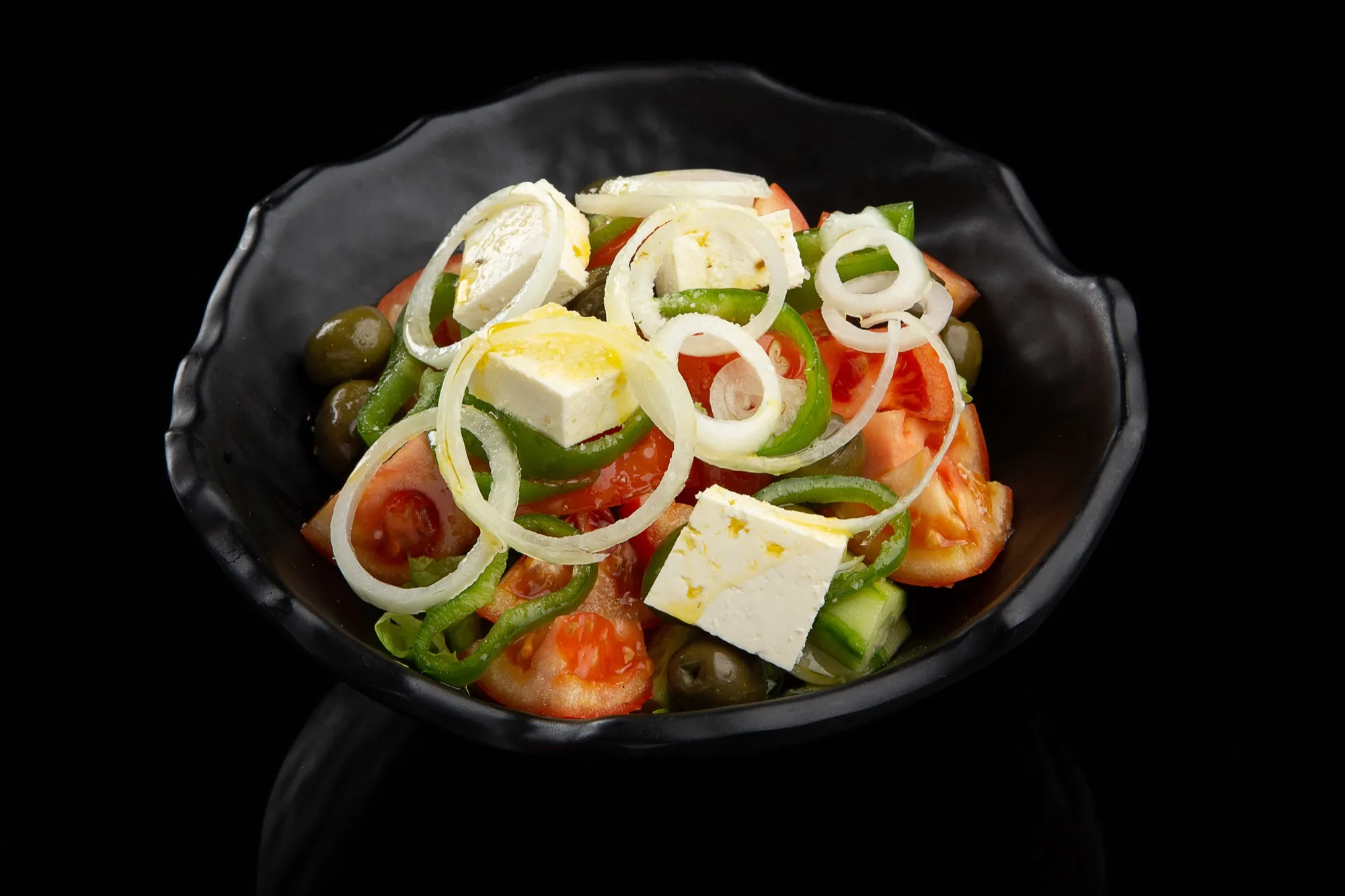
You can make tavë kosi, byrek and fërgesë lighter without turning them into something else: trim the fat from the meat, swap part of the butter for olive oil, brush rather than pour, and let the cheese provide the salt instead of adding more. These changes follow WHO advice to keep saturated fat under 10% of energy and salt under 5 g a day. Below we show where the fat and salt sit in each dish, with USDA figures, and what we would change.
This guide is general information, not a diet. If you have high blood pressure, high cholesterol, diabetes, kidney disease or other specific needs, ask your doctor or a registered dietitian what suits you.
The two numbers that matter
Saturated fat. WHO recommends that total fat stay at or below 30% of daily energy and saturated fat below 10%. The Italian CREA guidelines say the same for saturated fat, about 22 g on a 2,000 kcal day. Harvard adds an important point: cutting saturated fat helps when it is replaced with unsaturated fat, such as olive oil, not with refined starch.
Salt. WHO recommends less than 5 g of salt a day for adults, under 2 g of sodium. The NHS uses 6 g as the maximum. Albania’s Institute of Public Health (ISHP) puts “5 grams of salt a day” in the title of its leaflet and also cites 6 g as the acceptable maximum. It notes that bread and bakery products, byrek included, provide about 40% of the salt Albanians eat, and that most salt comes from food made outside the home. Its leaflet quotes an Albanian proverb that fits this whole guide: gjella me kripë, por kripa me karar, food with salt, but salt in measure.
Where the fat and salt are
All values per 100 g, from USDA FoodData Central (SR Legacy) and the CREA tables.
| Ingredient | Energy | Fat | Saturated fat | Sodium |
|---|---|---|---|---|
| Butter, salted (USDA) | 717 kcal | 81.1 g | 51.4 g | 643 mg |
| Olive oil (USDA) | 884 kcal | 100 g | 13.8 g | 2 mg |
| Feta (USDA) | 265 kcal | 21.5 g | 13.3 g | 1,140 mg |
| Feta (CREA) | 250 kcal | 20.2 g | n/a | 1,440 mg |
| Ricotta, part skim (USDA) | 138 kcal | 7.9 g | 4.9 g | 99 mg |
| Filo pastry (USDA) | 299 kcal | 6.0 g | 1.5 g | 483 mg |
| Lamb leg, lean and fat, raw (USDA) | 230 kcal | 17.1 g | 7.4 g | 56 mg |
| Lamb leg, lean only, raw (USDA) | 128 kcal | 4.5 g | 1.6 g | 62 mg |
To turn sodium into salt, multiply by 2.5. Feta then holds about 2.9 g of salt per 100 g by USDA figures and 3.6 g by CREA’s, well over the 1.5 g per 100 g that both the NHS and the ISHP call high. Filo pastry already holds about 1.2 g of salt per 100 g before any filling goes in.
Tavë kosi
Our tavë kosi recipe uses 1 kg of lamb shoulder or leg, 90 g of butter in total (30 g to brown the meat, 60 g in the topping), 800 g of yogurt and 4 eggs.
- Trim the meat. In the USDA data, lamb leg trimmed of visible fat has 128 kcal and 1.6 g of saturated fat per 100 g, against 230 kcal and 7.4 g with the fat on. CREA and WHO both advise removing visible fat before cooking. Leg is leaner than shoulder.
- Brown in olive oil only. The recipe already uses 2 tablespoons of oil with the butter. Dropping the 30 g of butter removes about 15 g of saturated fat from the dish, by our calculation on USDA values.
- Use less butter in the topping. The roux binds the yogurt; 30 g of butter instead of 60 g still cooks the flour.
- Try part low-fat yogurt. Half whole, half low fat keeps the creamy top with less saturated fat.
- Salt once. Season the meat, then taste the topping before adding more.
Byrek
Our spinach byrek uses 250 g of white cheese or feta, 100 ml of olive oil and 50 g of butter, and the byrek with gjizë follows a similar pattern.
- More oil, less butter. A byrek brushed with olive oil alone loses most of the butter’s saturated fat. If you miss the flavour, keep a little butter for the top layer only.
- Brush, do not pour. A thin coat on each sheet is enough for the layers to crisp. NHS advice is to use butter and similar fats less often and in smaller amounts.
- Mix the cheese. Replace part of the feta with ricotta: part-skim ricotta has under a tenth of feta’s sodium per 100 g in USDA data, and fewer calories. This is the same mix we suggest when gjizë is not available (see our guide to Albanian cheese).
- No extra salt in the filling. The recipes already say to taste first, because the cheese is salty. Remember that the filo is salted too.
- Vegetable fillings. Spinach, leek or pumpkin byrek carry vegetables along with the cheese. Leek byrek and pumpkin byrek are on the site.
Fërgesë
Fërgesë is peppers and tomatoes baked with gjizë, with butter, oil and a spoonful of flour.
- Skip the butter roux or halve it. Some recipes have no flour at all, as our recipe notes, and the vegetables thicken by themselves.
- Choose a milder cheese. If you use the ricotta and feta mix, shift it towards more ricotta and less feta. Taste before salting, as the recipe says.
- Keep the vegetables generous. WHO recommends at least 400 g of fruit and vegetables a day; a pan of peppers and tomatoes is a good part of that.
Salt without the salt shaker
The ISHP leaflet suggests herbs and spices instead of salt: garlic, onion, parsley, rosemary, oregano, mint and chilli, plus vinegar or lemon juice. It also recommends iodised salt and cutting down gradually, so taste adapts. The NHS adds two habits: taste before salting, and treat cheese, olives and pickles as the salty part of the meal. On a table with feta, olives and turshi, the bread and the salad need little or nothing more.
On soaking feta to remove salt, we found no authoritative figure. A 1983 study measured that rinsing cottage cheese for three minutes removed most of its sodium and also half its calcium, but feta is a different cheese, so we give no number.
Dishes that are already light
Plenty of Albanian dishes need no changes to be everyday food: bean stew, lentil stew, vegetable soup, stuffed peppers and tarator. Our guide to Albanian beans and lentils and the one on the Mediterranean diet in Albania go further.
For the Albanian-language reader, efarma.al explains how to read a cholesterol test and what really changes it, and has eight tips for eating well, both in Albanian.
What we do not promise
These changes lower the butter, saturated fat and salt in a dish. They are not a weight-loss plan and not a treatment. Festive dishes can stay festive: the point is to make the everyday versions lighter, not to ban tavë kosi on Sunday.
If you follow a diet for a medical reason, check any change with your doctor or a registered dietitian.
Frequently asked questions
Can tavë kosi be made lighter?
Yes, without changing what it is. Trim the visible fat from the lamb, brown it in olive oil instead of butter, use less butter in the yogurt topping and try part low-fat yogurt. USDA data show trimmed lean lamb leg has about a fifth of the saturated fat of untrimmed leg.
How much salt is too much?
WHO recommends adults eat less than 5 g of salt a day, about a level teaspoon, including the salt already in bread, cheese and pickles. The NHS sets 6 g as the maximum.
Does soaking feta in water remove salt?
Probably some, but we found no authoritative measurement for feta or Albanian white cheese, so we give no percentage. The only study we found tested cottage cheese, which lost much of its sodium when rinsed, and some calcium too.
Is olive oil better than butter in byrek?
For saturated fat, yes: per 100 g, USDA lists 51 g of saturated fat in butter and 14 g in olive oil. The energy is similar, so using less fat overall matters as much as the type.
Sources
- Healthy diet, World Health Organization (2026)
- Sodium reduction, World Health Organization (2026)
- Më pak kripë, më shumë shëndet, Instituti i Shëndetit Publik (2025)
- Linee guida per una sana alimentazione, revisione 2018, CREA
- Salt in your diet, NHS
- Fat: the facts, NHS
- Types of Fat, The Nutrition Source, Harvard T.H. Chan School of Public Health
- USDA FoodData Central, SR Legacy: Butter, salted (173410); Oil, olive (171413); Cheese, feta (173420); Cheese, ricotta, part skim milk (171248); Phyllo dough (172791); Lamb, leg, lean and fat (174311) and lean only (174313)
- CREA, Tabelle di composizione degli alimenti: Feta (162000)
- Vermeulen, Sedor, Kimm, Effect of water rinsing on sodium content of selected foods, Journal of the American Dietetic Association (1983)