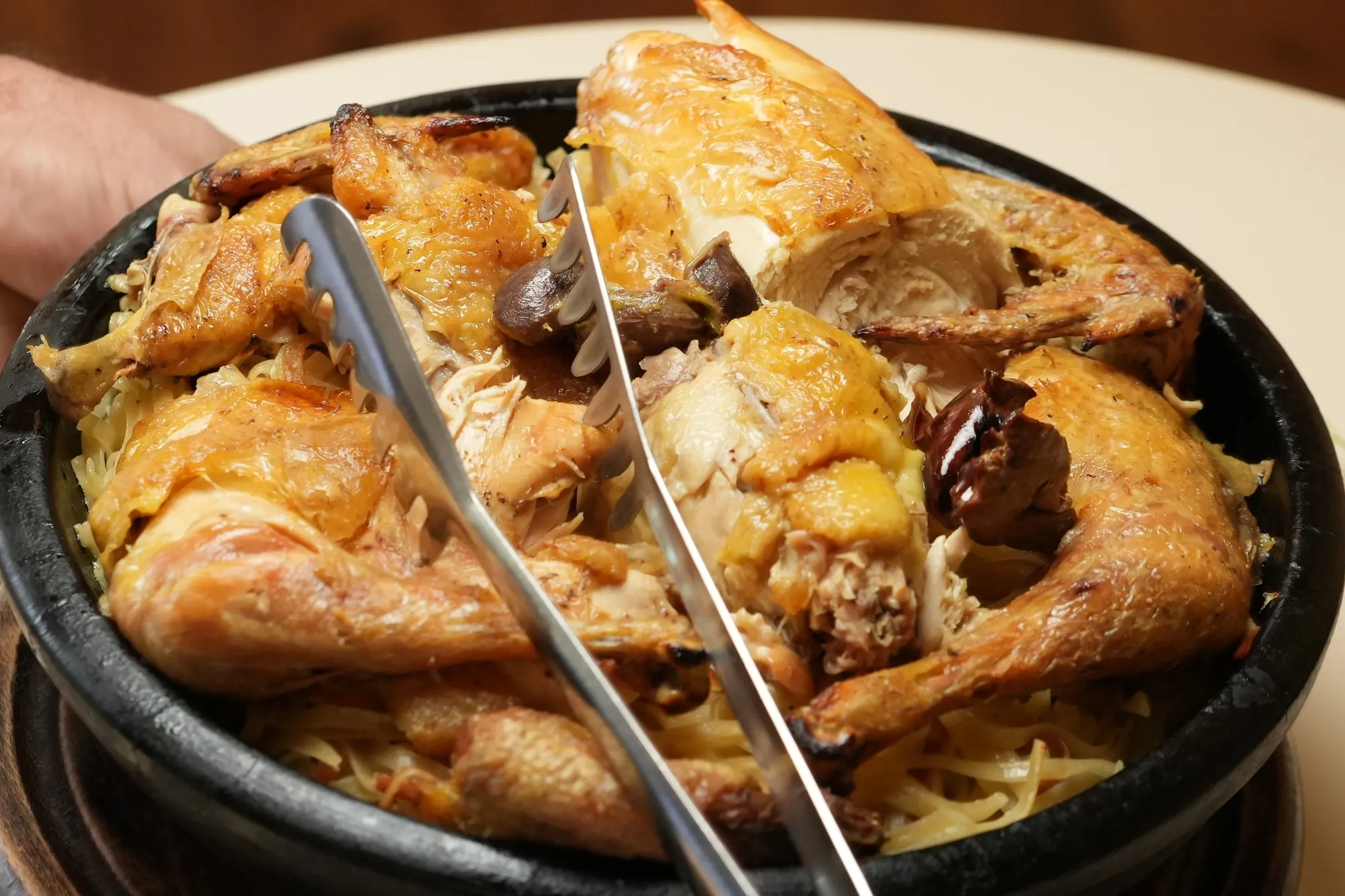
Jufka: Albanian Egg Noodles Baked with Chicken
Jufka recipe: dried Albanian egg noodles from Dibër, toasted in butter, then baked with chicken broth and pulled chicken until they crisp on top.
- Prep15 min
- Cook1 h 25 min
- Rest5 min
- Serves4
- DifficultyEasy
- RegionDibër
Ingredients
For the chicken and broth
For the jufka
Method
- Put the chicken in a pan with the water, onion, bay leaves and salt. Bring to the boil, skim off the foam and simmer over low heat for about 1 hour, until the meat comes away easily from the bone.
- Lift out the chicken, strain the broth and keep 800 ml (3 1/3 cups) hot. Remove the skin and bones and pull the meat into large pieces.
- Heat the oven to 180°C (350°F). Put the butter in a baking dish of about 25 x 35 cm (10 x 14 in) and put it in the oven until melted.
- Add the jufka to the dish, stir so it is all coated in butter and toast it in the oven for 7 to 10 minutes, stirring once, until lightly coloured.
- Pour the hot broth over the jufka, just enough to come level with it and no more. Taste for salt and add the pepper.
- Spread the chicken over the top and bake for 15 minutes, until the jufka has absorbed the broth and is lightly browned on top. If it dries out too early, add a little more broth.
- Leave for 5 minutes and serve hot.
Background and tips
Jufka (say “YOOF-kah”) are thin dried noodles of egg, milk and flour made in Dibër, in north-eastern Albania. The best-known dish made with them is jufka me pulë: the noodles are toasted in butter, then baked with chicken broth and chicken on top until they absorb the broth. Albania’s National Tourism Agency lists chicken with jufka among the dishes of Dibër. Packets of jufka are sold in Albanian and Balkan shops; dried egg noodles are the closest substitute. The rest of northern Albanian cooking, with its corn, dairy and mountain meat, is in our guide to Albanian regional cuisine.
Dry noodles, measured broth. Jufka is not boiled first: it is toasted dry in butter and then soaks up the broth in the oven. The broth should only come level with the noodles, never above them, or the dish turns into soup.
Homemade jufka. The dough is made with flour, eggs and milk, without water: about 1 kg (8 cups) of flour with 7 yolks and 1 whole egg, or 4 yolks and 4 eggs, and enough milk to make a firm dough. It rests from an hour to several days, is rolled into thin sheets that are left to dry a little, then rolled up and cut into thin strips, which are dried completely. They keep in boxes or bags in an airy place, so they do not go mouldy. In the past jufka was made in summer, so it would dry better.
Variations. Jufka is also boiled for 5 minutes in salted water and served with butter and grated kashkaval cheese, or with a sauce of cockerel. There is also jufka with meatballs. Jufka is not the same as trahana: trahana is made with yogurt or soured milk and crumbled into granules for soup.