Ajvar: Albanian Roasted Red Pepper Spread
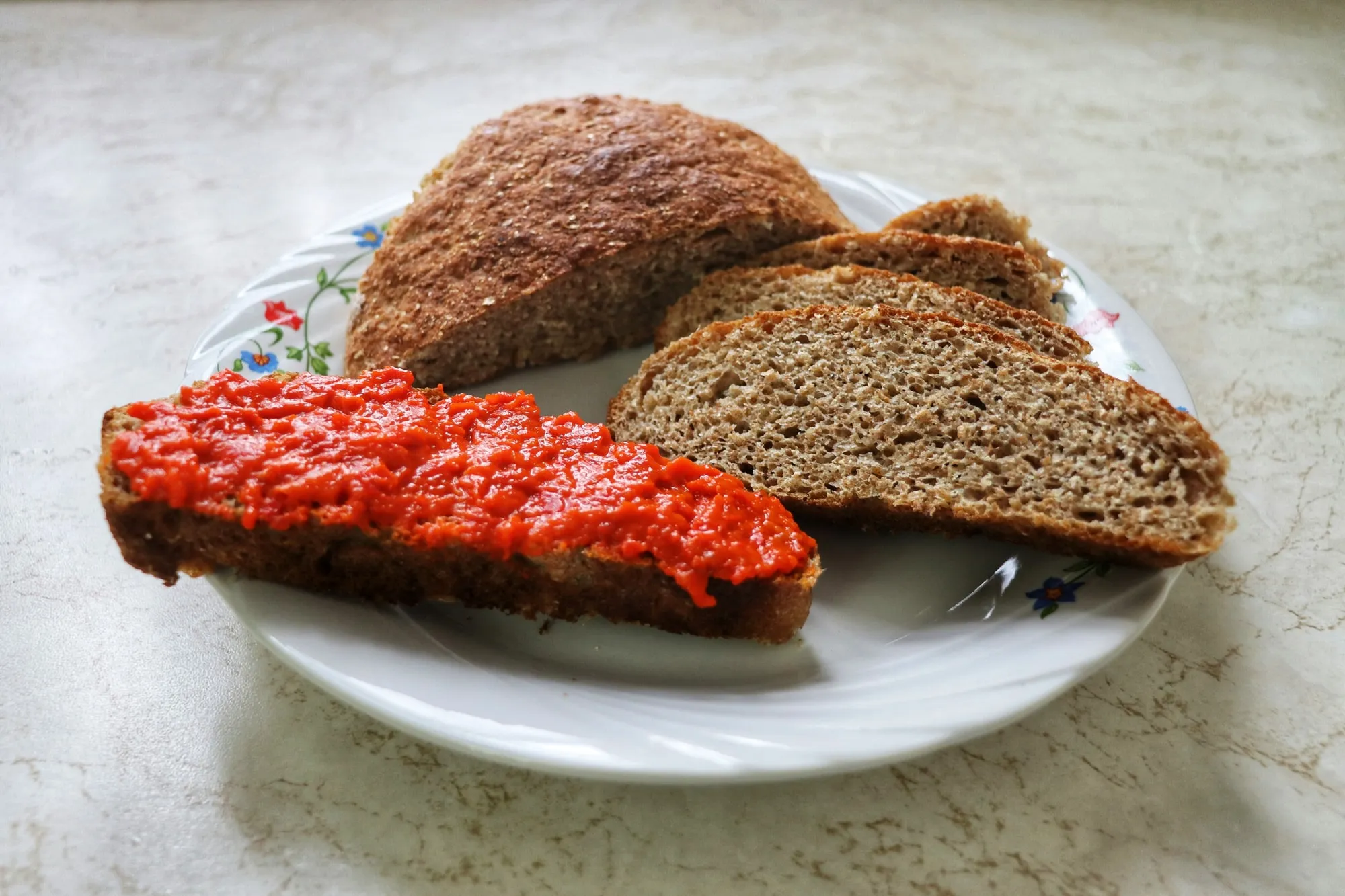
Ajvar recipe: a thick spread of roasted red peppers and a little aubergine, cooked slowly with oil, as in Kosovo. A small batch for the fridge or freezer.
- Prep40 min
- Cook1 h 45 min
- Rest1 h 20 min
- Serves12
- DifficultyMedium
- RegionKosovo
Ingredients
For about 800 g (1 lb 12 oz) of ajvar
Method
- Heat the oven to 220°C (425°F) and line two trays with baking paper. Put the whole peppers on one and the aubergines, pricked a few times with a fork, on the other.
- Roast for 40 to 45 minutes, turning halfway, until the pepper skins are blackened and blistered and the aubergines are very soft.
- Put the peppers in a bowl, cover with a lid or plate and leave for 20 minutes: the steam loosens the skins.
- Peel the peppers and remove the stalks and seeds. Split the aubergines and scoop out the flesh with a spoon.
- Put the peppers and aubergine in a colander and leave to drain for 1 hour.
- Mince them, or chop them very finely with a knife. If you use a blender, pulse it, so you do not end up with a smooth purée.
- In a wide, heavy-based pan, heat 3 tbsp of the oil, add the mixture and cook over low heat for 45 to 60 minutes, stirring often with a wooden spoon. Add the rest of the oil in two or three goes as it thickens. Take care, as it spits.
- The ajvar is ready when the spoon, drawn across the pan, leaves the bottom clear for a moment. Add the salt, sugar, vinegar and garlic and cook for another 5 minutes. Taste.
- Leave to cool, spoon into clean jars or tubs and cover the surface with a little oil.
- Keep in the fridge and eat within 4 days. For longer, freeze in small tubs for up to 6 months.
Background and tips
Ajvar (say “EYE-var”) is a thick spread of roasted red peppers with a little aubergine, cooked slowly with oil. In Kosovo and across the Balkans it is made in autumn, when peppers are plentiful, as a store for the winter, often by the whole family; Euronews has reported on the pepper season in Krusha e Madhe, in Kosovo. It is eaten as a meze with bread and cheese, and with grilled meat such as qebapa. How much of Kosovo’s cooking is shared with Albania is described in our guide to Albanian regional cuisine.
Why the fridge or the freezer. Peppers and aubergines are low in acid. Jars stored in a cellar under a layer of oil are not a tested safe method: neither the oil nor a vacuum stops botulism, which cannot be seen, smelled or tasted. There is no tested ajvar recipe for storing in the cupboard. That is why this batch is small: it keeps for a few days in the fridge, or it goes in the freezer. Throw away, without tasting, any jar with a bulging lid, foam, mould or an odd smell.
Peppers and draining. The peppers should be sweet and thick-fleshed. After roasting they are covered so they peel easily, then drained well: the less water they hold, the shorter the cooking. The flavour is fuller the next day.
The name and variations. According to Wikipedia, the name comes from the Turkish havyar, meaning caviar. Where ajvar comes from is disputed: Serbia and North Macedonia both have trademarks registered with the World Intellectual Property Organization. Some cooks add a little chilli or tomato sauce. There is also a quick version without the long cooking: the roasted peppers and aubergine are blended with oil, vinegar and garlic and eaten straight away.