Kos and Dhallë: Albanian Yogurt Nutrition Guide
What kos and dhallë are, what they contain per 100 g, what the live cultures really do and how Albanian cooks use yogurt, with sources.
Published
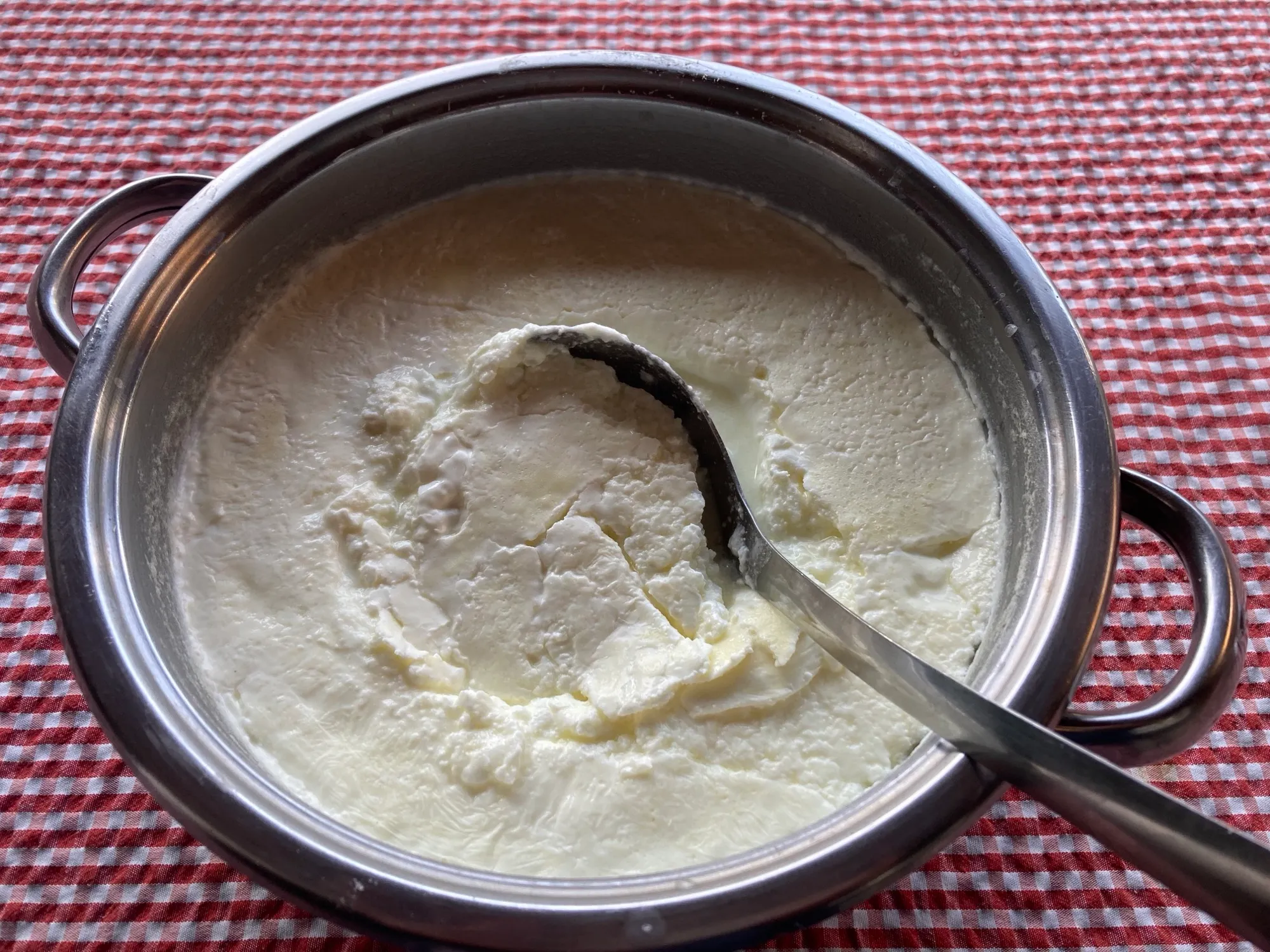
Kos is Albanian yogurt: milk fermented by lactic acid bacteria until it sets and turns pleasantly sour. Dhallë is kos thinned with water and usually salted, drunk cold with meals. Plain whole-milk yogurt has about 61 kcal, 3.5 g of protein and 121 mg of calcium per 100 g, according to USDA data. What it does not have, in the EU at least, is any right to be called “probiotic”: the only authorised claim is about lactose, and it comes with conditions explained below.
This guide covers what kos and dhallë are, what the numbers say, what the live cultures can and cannot claim, and how Albanian cooking uses yogurt both raw and baked.
This is general information, not medical advice. For specific needs (lactose intolerance, allergies, diabetes, pregnancy, children’s diets) talk to your doctor or a registered dietitian.
What kos is
The Codex Alimentarius, the international food standards body run by FAO and WHO, defines yogurt as milk fermented with two bacteria working together: Streptococcus thermophilus and Lactobacillus delbrueckii subsp. bulgaricus. The bacteria turn part of the milk sugar, lactose, into lactic acid. The acid thickens the milk and gives yogurt its tang.
The same standard sets minimum numbers. Yogurt must contain at least 2.7% milk protein and at least 0.6% acidity, and the starter bacteria must be at least 10 million per gram and stay “viable, active and abundant” until the date on the pot. Strained yogurt, the thick kind sold as Greek yogurt, is a separate category called concentrated yogurt.
In Albanian kitchens kos is also the base of other dishes. It is whisked with garlic and cucumber for tarator, stirred into batter for petulla with yogurt, and set with eggs and flour over lamb in tavë kosi.
What dhallë is
Dhallë is the everyday yogurt drink: kos beaten with cold water, often with a little salt. The Codex standard calls this kind of product a drink based on fermented milk. It allows added water and salt, but the label must say how much fermented milk the drink contains.
Two practical points follow. The water dilutes everything, so a glass of dhallë has less protein and calcium than the same glass of kos. And the salt counts: WHO recommends adults eat less than 5 g of salt a day, and a pinch in every glass adds up across the day.
What 100 g of yogurt contains
These figures come from USDA FoodData Central (SR Legacy) and, for comparison, from the Italian CREA food composition tables. They describe generic cow’s milk yogurt; a homemade kos from sheep’s milk will differ, and we have not found a database entry for Albanian kos.
| Per 100 g | Energy | Protein | Fat | Saturated fat | Calcium | Sodium |
|---|---|---|---|---|---|---|
| Plain yogurt, whole milk (USDA) | 61 kcal | 3.5 g | 3.3 g | 2.1 g | 121 mg | 46 mg |
| Plain yogurt, low fat (USDA) | 63 kcal | 5.3 g | 1.6 g | 1.0 g | 183 mg | 70 mg |
| Greek yogurt, whole milk (USDA) | 97 kcal | 9.0 g | 5.0 g | 2.4 g | 100 mg | 35 mg |
| Greek yogurt, nonfat (USDA) | 59 kcal | 10.2 g | 0.4 g | 0.1 g | 110 mg | 36 mg |
| Whole milk yogurt (CREA) | 66 kcal | 3.8 g | 3.9 g | n/a | 125 mg | 48 mg |
Three things stand out. Low-fat plain yogurt has more protein and calcium per 100 g than whole yogurt in the USDA data, with about half the saturated fat. Straining raises protein a lot but, as Harvard notes, part of the calcium leaves with the whey. And plain yogurt is low in sodium: the salt in dhallë or tarator is the salt you add.
The Italian CREA guidelines use 125 g, one small pot, as the standard portion of yogurt and suggest a portion of milk or yogurt a day, preferably part-skimmed, which keeps the calcium and protein. If calcium for bones is your question, efarma.al has an article in Albanian on how to keep bones healthy, with calcium and vitamin D sources.
Live cultures: what they can claim
This is where yogurt marketing and the rules part ways.
The authorised claim. In the EU, yogurt has one approved health claim. Its wording, as published by the Food Safety Authority of Ireland, is that live cultures in yogurt or fermented milk improve the digestion of the lactose in the product in people who have difficulty digesting lactose. The condition is at least 100 million (10^8) live starter bacteria per gram. A product that meets it may say it “contains live yoghurt cultures”.
The word probiotic. EU authorities treat “probiotic” on a label as a health claim, and no probiotic claim has been authorised. So we do not call kos or dhallë probiotic, and you should be wary of anyone who sells them that way.
Fermented is not the same as probiotic. The 2021 consensus of the International Scientific Association for Probiotics and Prebiotics (ISAPP) defines fermented foods as foods made through desired microbial growth. Bread is fermented, even though baking kills the yeast. “Probiotic” is reserved for defined strains with a proven benefit. Yogurt is the most studied fermented food, but that does not make every pot a probiotic.
Does cooking kill the cultures?
Yes. ISAPP gives bread as the example of a fermented food whose microbes do not survive cooking, and the Codex standard drops the live culture requirement for fermented milks that are heat treated after fermentation. Harvard also notes that heat destroys the bacteria.
So the kos in a baked tavë kosi, or in a cooked batter, is still yogurt as an ingredient, with its protein and calcium, but it no longer brings live cultures. If live cultures matter to you, eat some kos raw: plain, in tarator, or with honey and walnuts at breakfast (see our guide to Albanian breakfast).
Yogurt and lactose intolerance
Fermentation uses up part of the lactose, which is why, according to Harvard, some people who cannot drink milk can eat yogurt. The Italian CREA guidelines say most people with poor lactose digestion tolerate about 12 g of lactose, roughly a cup of milk, and that yogurt and aged cheeses are generally well tolerated.
Yogurt still contains lactose, though. The NHS notes that smaller portions can help and advises getting a diagnosis and speaking to a doctor or dietitian before removing foods from your diet.
What the studies say, carefully
Large observational studies have linked yogurt with some good outcomes. A 2014 analysis in BMC Medicine, combining three US cohorts with a meta-analysis of 14 studies, found that one more serving of yogurt a day was associated with a lower risk of type 2 diabetes (relative risk 0.82). Other dairy foods showed no clear association. Harvard’s Nutrition Source summarises studies associating yogurt with less weight gain over time, and calls the evidence limited.
Observational studies show associations, not cause and effect: people who eat yogurt may differ in other ways. So the honest summary is that plain yogurt is a nutritious food that fits a healthy diet, not that it prevents diabetes or helps you lose weight.
How Albanian cooks use kos
- Raw, as a side. A bowl of kos next to byrek, fërgesë or grilled meat is a simple way to serve it. It adds protein and calcium without salt.
- Cold sauces and soups. Tarator is kos with cucumber, garlic, oil and sometimes walnuts.
- Baked. Tavë kosi sets kos with eggs over lamb or chicken. Our guide to lighter Albanian dishes explains how to trim the fat without losing the dish.
- Batters and cakes. Kos goes into the batter of petulla with yogurt.
- Drinks. Dhallë, cold, with lunch.
Choosing and storing yogurt
- Plain over flavoured. Harvard suggests buying plain yogurt and adding fruit yourself, because flavoured yogurts often carry added sugar.
- Read the label. “Contains live yoghurt cultures” tells you the cultures are there; the word probiotic, in the EU, should not appear.
- Whole or low fat. Both are yogurt. Low fat has less saturated fat; whole is richer for cooking. In tavë kosi, a mix works well.
- Salt your dhallë lightly, or not at all, if the meal already has salty cheese or pickles.
Sources and limits
All nutrient values come from USDA FoodData Central and the CREA tables named in the sources. Rules on claims come from the Codex standard and the Food Safety Authority of Ireland, which publishes the EU authorised wording. We have not measured any yogurt ourselves.
For questions about your own diet, especially lactose intolerance, diabetes or children’s nutrition, ask your doctor or a registered dietitian.
Frequently asked questions
What is kos?
Kos is the Albanian word for yogurt: milk fermented by lactic acid bacteria until it thickens and turns sour. It is eaten plain, used in tarator and baked in tavë kosi.
What is dhallë?
A drink made by thinning yogurt with water, usually with a pinch of salt, similar to Turkish ayran. Under the Codex standard, a fermented milk drink with added water must declare the water and the share of fermented milk.
Is kos probiotic?
In the EU the word probiotic counts as a health claim and none has been authorised, so we do not use it. The one authorised claim for yogurt is that live yogurt cultures improve the digestion of the lactose in the product for people who have trouble digesting lactose, with at least 100 million live cultures per gram.
Does baked kos still have live cultures?
No. Cooking kills the bacteria, as it does in bread. The Codex standard drops the live culture requirement for fermented milks heated after fermentation. Tavë kosi is still a yogurt dish, but not a source of live cultures.
Can people with lactose intolerance eat kos?
Many people who digest lactose poorly tolerate yogurt better than milk, according to Harvard and the Italian CREA guidelines, but yogurt still contains lactose. The NHS advises talking to a doctor or dietitian before cutting foods out.
Sources
- Codex Standard for Fermented Milks, CXS 243-2003, FAO/WHO Codex Alimentarius
- Probiotic health claims, Food Safety Authority of Ireland
- Yogurt, The Nutrition Source, Harvard T.H. Chan School of Public Health
- Marco et al., ISAPP consensus statement on fermented foods, Nature Reviews Gastroenterology & Hepatology (2021)
- Chen et al., Dairy consumption and risk of type 2 diabetes, BMC Medicine (2014)
- Lactose intolerance, NHS
- Milk and dairy nutrition, NHS
- Sodium reduction, World Health Organization
- Linee guida per una sana alimentazione, revisione 2018, CREA
- USDA FoodData Central, SR Legacy: Yogurt, plain, whole milk (FDC 171284); Yogurt, plain, low fat (170886); Yogurt, Greek, plain, whole milk (171304); Yogurt, Greek, plain, nonfat (170894)
- CREA, Tabelle di composizione degli alimenti: Yogurt, da latte intero (150010)