Albanian Breakfast: What Albanians Eat
A typical Albanian breakfast is light: bread, white cheese, olives, yogurt or jam with coffee. Then come petulla, byrek, paçe and regional porridges. A guide.
Published
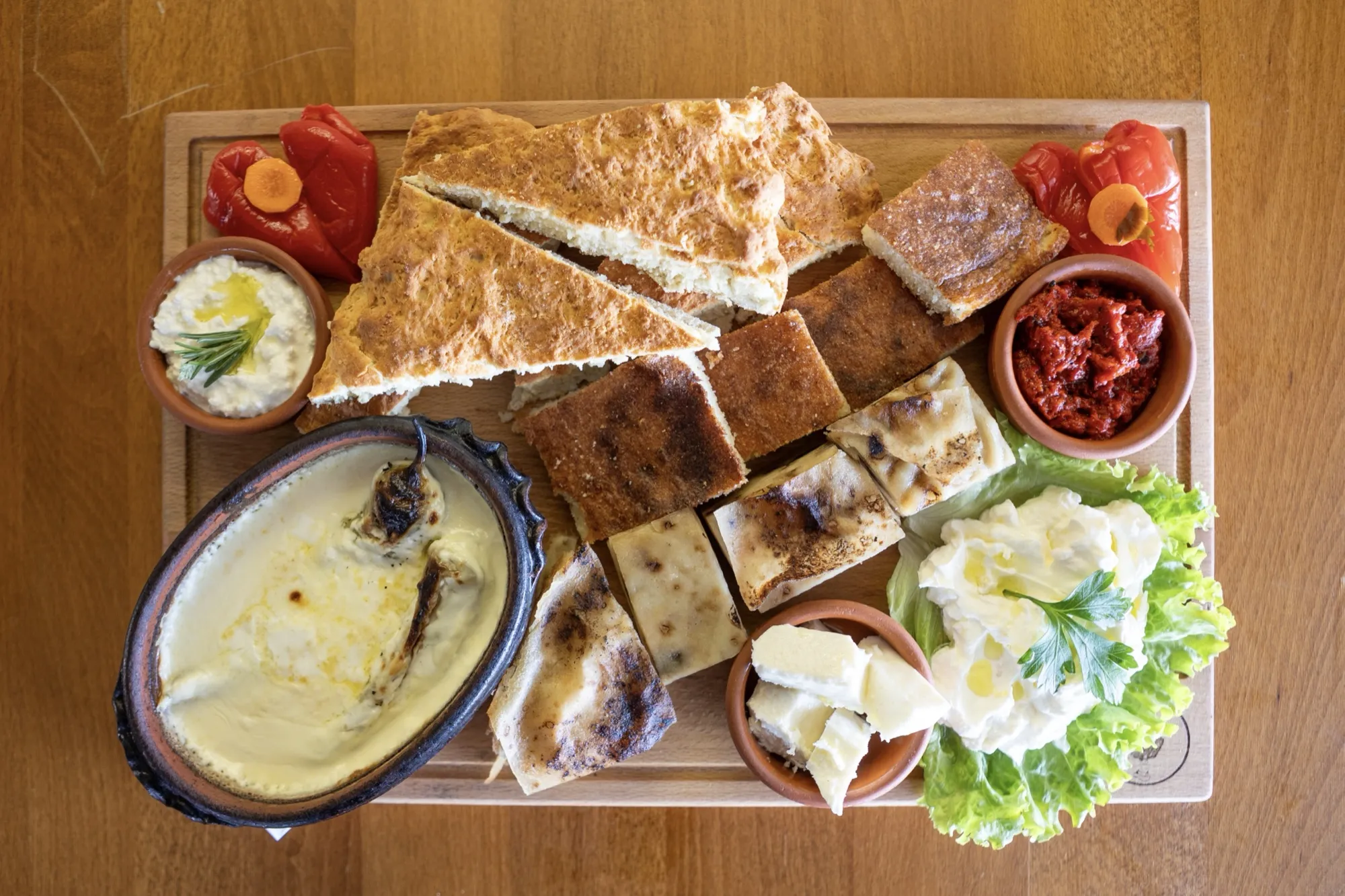
A typical Albanian breakfast is light: bread with butter, white cheese, olives, yogurt or jam, eaten with coffee, milk or tea. Wikipedia adds that many people have only fruit, or just bread and coffee, because the main meal of the day in Albania is lunch. Around this simple base there are richer morning dishes that change from town to town: fried dough called petulla, slices of byrek from the bakery, porridges like trahana and qull in the countryside, and, for the brave, paçe, a soup made from a sheep’s head.
This guide covers what Albanians eat in the morning at home, what they buy on the way to work, the regional breakfasts and what the data say about who skips it.
The everyday breakfast at home
Most Albanian breakfasts are assembled rather than cooked. On the table:
- Bread.
- White cheese (djathë i bardhë), a brined cheese similar to feta.
- Butter, often with honey or jam (reçel).
- Olives.
- Yogurt (kos), plain and slightly sour.
- Coffee, milk or tea.
If you want to recreate it outside Albania, feta stands in for the cheese and plain whole-milk yogurt for kos. The idea is a plate of a few good things, not a cooked meal.
Wikipedia also lists raki among breakfast drinks, and Bradt Guides calls it “a morning pick-me-up”. It is part of the picture, not the centre of it.
Petulla: the breakfast you cook
Petulla are pieces of yeast dough fried in hot oil until they puff up. The National Tourism Agency says they are found in almost every home, and its pages describe two local traditions:
- In Korçë, petullat e fshira, flattened by hand before frying, “never go missing” from breakfast tables. They are served with honey, white cheese or powdered sugar.
- In Belsh, near Elbasan, petulla are described as an important part of the local breakfast.
Our petulla recipe explains the method step by step.
Byrek and breakfast on the go
Outside the house, breakfast often means byrek: a slice of pie with cheese, spinach or meat, bought warm from a bakery. Rough Guides writes that young Albanians live “almost entirely on snack food”, byrek above all, and AramcoWorld calls byrek the street food of the Balkans. National Geographic, writing about the wider Balkan breakfast, describes byrek eaten with Turkish coffee or yogurt as the simple morning meal of the region.
If you want to make one at home, try our spinach byrek or the lakror of Korçë. For the differences between the names, see our guide to byrek, burek and börek.
Paçe: the traditional early-morning soup
Paçe (also paçë koke) is a soup or stew made from a sheep’s or cow’s head. Lonely Planet describes sheep’s head soup as “usually served for breakfast”. A 2017 report from Tirana in Roads & Kingdoms presents paçe as the traditional breakfast, the alternative to pastries and coffee,.
It is not a daily breakfast for most Albanians today, but it is the dish visitors are most surprised by.
Regional and rural breakfasts
Wikipedia says that “every region has its own typical breakfast”. The sources we found allow a few examples:
| Where | Breakfast | What it is |
|---|---|---|
| Korçë | Petullat e fshira | Flattened fried dough with honey, cheese or sugar |
| Belsh | Petulla | Fried dough, part of the local breakfast |
| Lushnjë | Qull me gjalpë dhe djathë | A soft porridge with butter and cheese, “a typical Lushnjë breakfast” |
| Rural areas, south | Trahana | A soup of cracked wheat fermented with yogurt or milk |
| Tirana and cities | Byrek, coffee | Bought on the way to work |
Trahana deserves a word. It is made from wheat and fermented milk or yogurt, dried so that it keeps through the winter. The national heritage register describes its preparation in Gjirokastër and Tepelenë and how it is cooked with bread, butter or olive oil, white cheese and paprika. Wikipedia calls it a common breakfast in many rural areas.
Flija, the layered pie of the north and Kosovo, belongs to feasts rather than to the morning: the heritage register links it with holidays and the welcoming of guests, and Slow Food notes it is eaten mainly at home as a main dish. Our flija recipe adapts it for a home oven.
In Kosovo, Wikipedia describes breakfast as usually light, with coffee and croissants, eggs or toast.
A guesthouse breakfast
Guesthouses that serve breakfast to travellers tend to lay out more. One example, from a writer who stayed in Himarë in 2017, included bread, warm byrek, local honey, jams, boiled eggs and black coffee. It is a single account, but it uses the same simple elements as the home breakfast, with something warm from the oven.
Coffee in the morning
Rough Guides puts it simply: “Coffee is king in Albania.” The guide adds that espresso now prevails over Turkish coffee, the older habit from the Ottoman period. Albania also has one of the highest numbers of cafés per inhabitant in Europe; our guide to Albanian food has the figures.
What the data say
The best data we found are about children. The COSI study of 2021 to 2023, run by Albania’s Institute of Public Health with the WHO and UNICEF, asked about the breakfast habits of children aged 8 and 9:
| Breakfast habit (children 8-9) | Share |
|---|---|
| Every day | 70.4% |
| Most days | 8.5% |
| Never | 5.1% |
| Every day, in cities | 72.1% |
| Every day, in rural areas | 67.7% |
The study also found that skipping breakfast became more common as body mass index rose, from 35% of the thinnest children to just over half of those with obesity. We found no national data on adults.
How to make an Albanian breakfast at home
For a weekday, put out bread, feta, olives, a bowl of plain yogurt, honey and coffee. For a weekend, add petulla with honey or cheese. If you have byrek left over from the night before, warm a slice in the oven. If you want something warm and savoury, a baked dish like fërgesë works well with bread, although no source we found calls it a breakfast dish.
Frequently asked questions
What is a typical Albanian breakfast?
A light one: bread with butter, white cheese, olives, yogurt or jam, with coffee, milk or tea. Many people have only fruit, or bread and coffee. Lunch, not breakfast, is the main meal of the day.
What are petulla?
Small pieces of yeast dough fried in oil until puffy. They are eaten at breakfast with honey, white cheese, jam or powdered sugar, and in Korçë the flattened version called petulla e fshirë is a fixture of the morning table.
Do Albanians eat byrek for breakfast?
Yes, often bought from a bakery and eaten with yogurt or coffee. Rough Guides writes that young Albanians live largely on snack food, especially byrek, and National Geographic describes byrek with coffee or yogurt as a simple Balkan breakfast.
Is it true that Albanians eat sheep's head soup for breakfast?
Some do. Paçe, a soup made from a sheep's or cow's head, is a traditional morning dish; Lonely Planet describes it as usually served for breakfast. It is a specialty, not an everyday breakfast at home.
Do Albanians drink coffee at breakfast?
Coffee is the constant. Rough Guides calls coffee king in Albania and notes that espresso now prevails over Turkish coffee.
Sources
- Albanian cuisine, Wikipedia
- Petullat e fshira, Korçë, National Tourism Agency of Albania (in Albanian)
- Petulla and oven sweets, Belsh, National Tourism Agency of Albania (in Albanian)
- Petulla, National Tourism Agency of Albania (in Albanian)
- Lushnjë, National Tourism Agency of Albania (in Albanian)
- Artisanal preparation of trahana, National Register of Intangible Cultural Heritage of Albania
- Europe on a Shoestring, Albania chapter preview, Lonely Planet
- Dave Hazzan, Trust Us, We Meant to Order the Cow Head Stew, Roads & Kingdoms (2017)
- Madeleine D'Este, A Private Albanian Breakfast, Roads & Kingdoms (2017)
- Food and drink in Albania, Rough Guides
- Albania Travel Information, Bradt Guides
- Tristan Rutherford, Albania's Resurging Cuisine, AramcoWorld (2024)
- Leah Worthington, The Balkan breakfast trend, National Geographic (2024)
- Assessment of Childhood Obesity, COSI 2021-23, Institute of Public Health of Albania with WHO and UNICEF
- Kosovar cuisine, Wikipedia