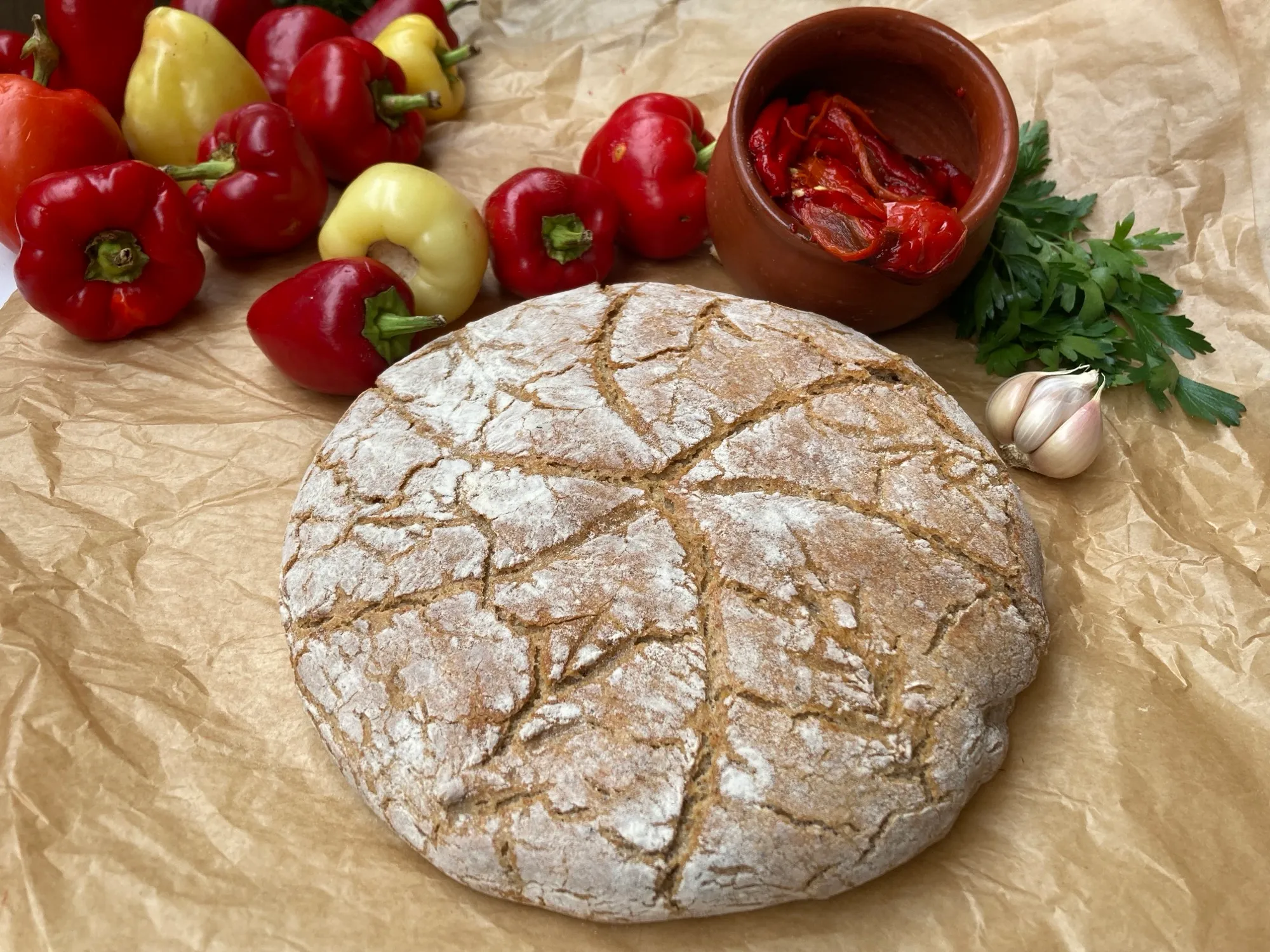
Albanian Soda Bread (Kulaç) with Yogurt
Albanian soda bread, kulaç: a round, yeast-free loaf of flour, yogurt, an egg and soda, under an hour to mix and bake, plus cooling. How to avoid a soapy taste.
- Prep15 min
- Cook40 min
- Rest1 h
- Serves8
- DifficultyEasy
Ingredients
For the bread
Method
- Heat the oven to 200°C (400°F, gas 6) and oil a baking tray or line it with baking paper.
- In a bowl, beat the yogurt with the egg, oil and salt. Add the bicarbonate of soda and stir well, so that it spreads through all the yogurt.
- Add the flour a little at a time and mix by hand only until you have a soft dough that does not stick. If it stays dry, add a little lukewarm water. Do not knead it for long.
- Shape it into a disc 20 to 22 cm (8 to 8 1/2 in) across and about 2.5 cm (1 in) high, place it on the tray and prick the whole surface with a fork.
- Bake straight away for 35 to 40 minutes, until golden and hollow-sounding when tapped underneath. If the top browns too fast, cover it loosely with foil.
- Cover with a tea towel and leave to cool on a rack for about an hour before cutting.
Background and tips
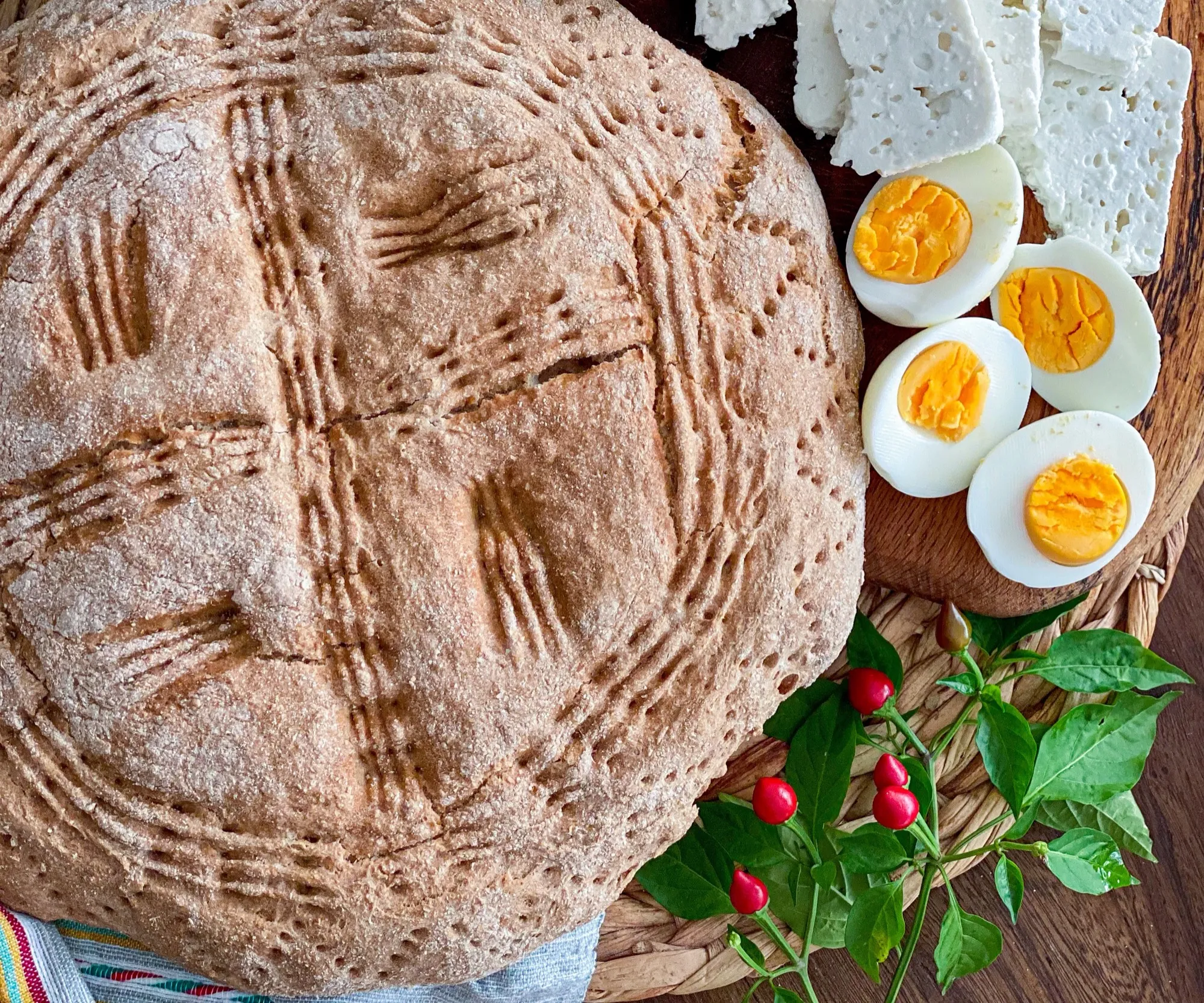
Kulaç (say “koo-LAHCH”) is the round Albanian bread that does not wait to rise: flour, yogurt, an egg and a little bicarbonate of soda. It takes less than an hour to mix and bake, then an hour to cool. Albania’s National Tourism Agency calls it the traditional bread of the family table and of important celebrations, round, baked in the oven or under a saç (an iron bell covered with embers), and served with cheese and fresh butter. Broken into crumbs, it is the base of përshesh. Other everyday dishes are in our guide to Albanian food.
Why it should not wait. Bicarbonate of soda starts working as soon as it meets the sour yogurt, so the dough is not kneaded for long and goes into the oven as soon as possible. Keep the soda small and measured: too much, or too little yogurt, leaves the bread with a bitter, soapy taste and a yellowish colour. Some recipes rest the dough for 30 minutes before baking; we chose to bake it straight away, like most of the recipes we read, but this is a point still to be tested. Kulaç is dense and close-textured: that is its nature, not a mistake. Cut it once cool, because when hot it looks raw inside.
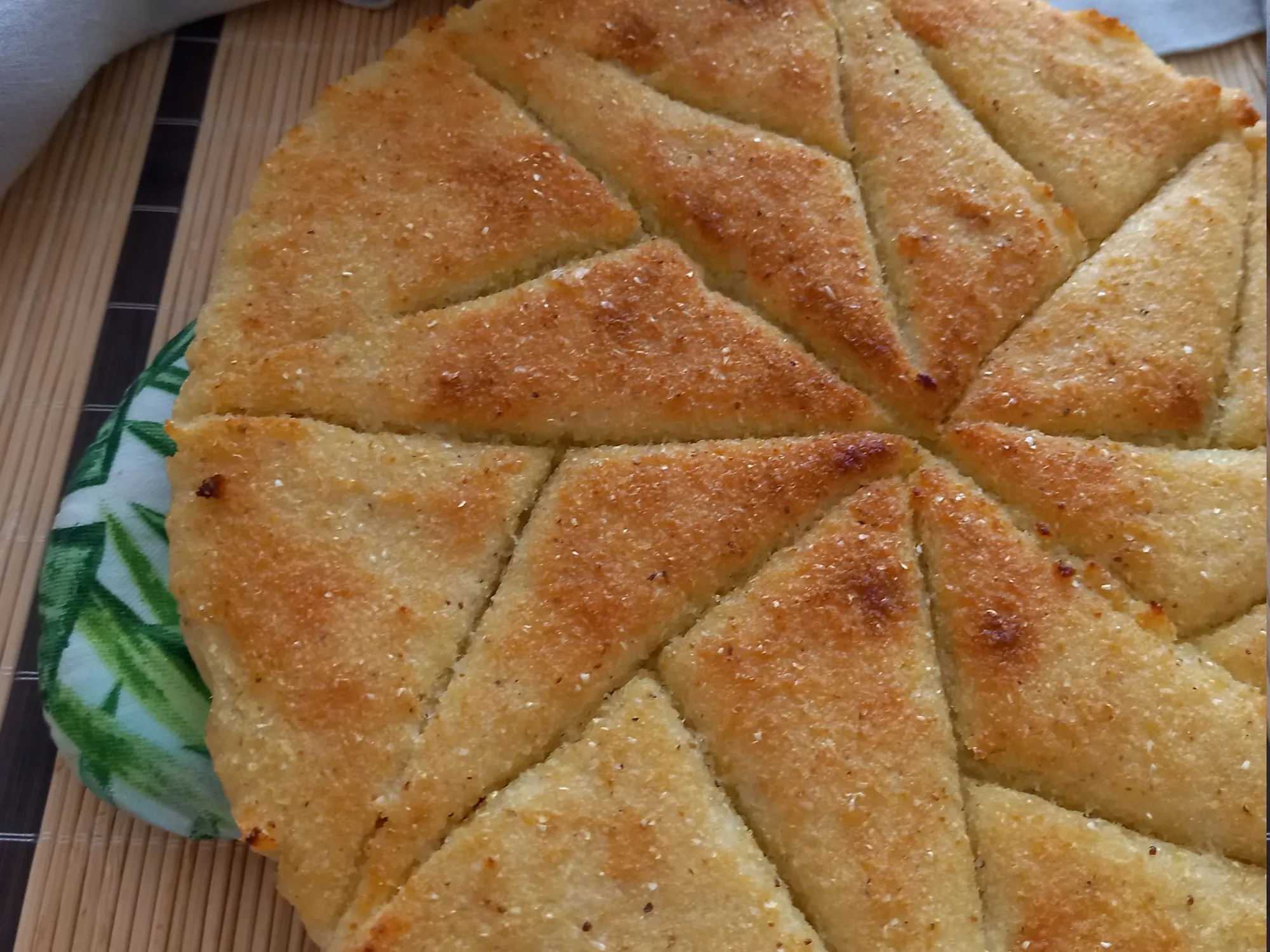
Albanian or Irish? The chemistry is the same as in Irish soda bread: bicarbonate of soda and a sour dairy product. Irish soda bread uses buttermilk, with no egg or oil, and is marked with a cross; kulaç uses kos, Albanian yogurt, often an egg and a spoonful of olive oil, and is pricked with a fork. The word kulaç does not always mean the same bread: the Tourism Agency describes it without yeast in Poliçan, but with soda or yeast in Delvinë and Konispol, and in Kosovo there is a yeasted kulaç with kajmak. For the everyday yeasted loaf see our Albanian bread, and for the version made with cornmeal, often called kulaç misri, our Albanian cornbread.
For përshesh, and variations. For the përshesh served with roast turkey, kulaç is baked a day ahead and made drier, often without egg and with little yogurt, so that it crumbles well. The Albanian TV cook zonja Albana also makes a softer kulaç with a little sugar and a pinch of yeast as well as soda, and a bread with whey instead of water. Some families leave out the egg altogether. Serve it with white cheese, butter and olives, or with tarator.